miércoles, 8 de mayo de 2013

PROBLEMS WITH THE WATER YOU DRINK ??


Legionella_pneumophila_(SEM)_ Image from CDC Public Health Image LibraryTraditionally, most microbial waterborne diseases in the United States are gastrointestinal and short-term, self-resolving infections. They can include bacterial pathogens, enterovirus, rotavirus, norovirus and hepatitis A virus, or protozoa like Cryptosporidium and giardia.
Although detecting waterborne disease outbreaks is difficult, and numbers are underestimates, reported waterborne disease outbreaks in the United States have declined since implementation of the 1974 Safe Drinking Water Act. The range is from a high of 90 reported outbreaks in 1979-1982 to fewer than 10 in 2002, out of about 60,000 community water systems. In addition, surveillance for outbreaks is today better than in the past, and identification of the causative microbial pathogens has significantly improved.
The reduced outbreak incidence is probably attributable to EPA requirements for microbial quality monitoring and increased water treatment that involves filtration and disinfection of surface water and disinfection of groundwaters. However, while the number of waterborne outbreaks has declined, the portion attributable to distribution system contamination has increased.

In the public eye
Beginning in 2001 Legionaires disease was added to the surveillance and reporting system, and incidences of water-related legionellosis are being reported with some regularity worldwide. Legionellosis is a consequence of inhalation of aerosols contaminated with Legionella pneumophila and perhaps other related species.
Legionaires disease gets its name from a 1976 outbreak among attendees at an American Legion convention in Philadelphia staying at a particular hotel. There were 221 reported cases and 34 deaths from pneumonia. It required about six months of intense microbiological and chemical investigations to identify the causal bacterial agent because there was no known culturing technique available for the then unknown strain of bacteria.
The origin of exposure was blow-down inhaled aerosols from an air-conditioning system. The cases indicated that smokers were at greater risk than non-smokers. Speculation as to origin was rampant, and it even included a supposed “theory” involving a relatively exotic chemical that might have been pyrolyzed while smoking cigarettes. I recall hearing a report from a U.S. Senate committee that undertook its own assessment and announced that supposed chemical cause, shortly before the true microbial agent was identified. Apparently politics and science don’t mix very well.
Retrospective investigations revealed that in fact numerous “legionnaires” cases had occurred previously and had not been identified, and that a milder form of respiratory infection called Pontiac fever was not uncommon. Many outbreaks and deaths have been reported since then, especially in hospitals. The U.S. Centers for Disease Control has estimated up to 18,000 legionellosis deaths in the U.S. each year.
What actually happens
Since 1976 it has been determined that Legionella pneumophila are fairly common soil and water bacteria and pathogenic when inhaled, not from ingestion. They grow under low nutrient warm water conditions at temperatures in the range of 25 C to 50 C. So, they can be present in warm to hot water systems, showerheads, humidifiers, misting and cooling water for air conditioning systems and hot tubs. In distribution systems and plumbing they can colonize biofilms where they may be protected from normal disinfectant residuals.
The at-risk populations are predominantly those who are elderly and also persons with impaired immune systems. Hospital environments have been the source of numerous cases of outbreaks and deaths related to Legionella. However, it is apparent that there are high-risk people in the general population; for them even a typical house or building environment could be a risk, and specific diagnoses and determinations of causal origin will be less likely.
There are water system management techniques for reducing patient risks used by many hospitals. They include monitoring their plumbing systems, additional disinfection and periodic shock disinfection or heating. Chlorine, chlorine dioxide and even peroxides and silver and copper are being used, but with some controversy for the latter two. There are several studies that indicate that systems with chloramine residuals have a much lower risk of a Legionella related outbreak than those with free chlorine residuals. The rationale is that although chloramines are less potent than free chlorine, their lower chemical reactivity allows them to more effectively penetrate biofilms that may harbor the Legionella.
Other recommendations include maintaining hot water systems above 50 C to reduce growth of the microorganisms, but the dilemma is that temperatures in the 55 C to 60 C range introduce a scalding risk, especially for children and seniors.

Moral of story
The law of unanticipated consequences is still functioning. The benefits of modern warm controlled housing environments, air conditioning and indoor hot water plumbing can have downside consequences. Even those beneficial societal technological advances can provide an opportunity for otherwise innocuous microbes to proliferate and cause disease and death.
The moral of the story is that nature is always evolving, and there are perverse unidentified microbes out there that can harm us. Water treatment to control many microorganisms, not just E. coli, is essential, and waterborne microbial disease is still, and always will be, the greatest risk from public drinking water supplies. Aging water distribution systems require aggressive rehabilitation to prevent leaks and breaks where inoculation by microorganisms and accumulation in biofilms can occur. Replacing that aging infrastructure is a much greater national priority than the hypothetical risks of trace chemical contaminants that get a lot of publicity and lead people to spend money on bottled water because they think it is safer.

martes, 23 de abril de 2013

Gas Hazard Definitions and Data

Facts At Your Fingertips
April 1, 2013

Gas Hazard Definitions and Data

The detection of gases in plant environments has a critical and wide-ranging role in the chemical process industries (CPI). Among the major applications of gas detection are limiting personnel exposure to hazardous chemicals, preventing explosive atmospheres, protecting the environment and identifying leaks in process equipment. Table 1 summarizes the main reasons for gas monitoring.
All CPI workers should be conversant with gas-detection terms to promote safety, health and environmental quality. The following is a collection of terms and data involving hazardous gases (Table 2).
PEL (permissible exposure limit). Set by OSHA to limit workers’ exposure to an airborne substance, PELs are based on an eight-hour time-weighted average. PELs are enforceable legal limits.
TLV (threshold limit value). Established by the American Conference of Governmental Industrial Hygienists, TLVs are based on known toxicity of chemicals in humans or animals, and are recommendations, rather than legal limits.
IDLH (immediately dangerous to life and health). Defined in the U.S. by the National Institute for Industrial Safety and Health (Part of the Centers for Disease Control and Prevention) as a level of exposure that is likely to cause death or immediate or delayed permanent adverse health effects
LC50 (median lethal concentration). A measure of the toxicity of a surrounding medium that will kill half of a sample population of test animals in a specified period through exposure via inhalation.

Oxygen deficiency

Normal ambient air contains 20.8 vol.% oxygen. When oxygen concentration dips below 19.5 vol.% of the total atmosphere, the area is considered oxygen deficient. Oxygen deficiency may result from O2 being displaced by other gases, such as carbon dioxide, and can also be caused by rust, corrosion, fermentation or other forms of oxidation that consume oxygen. Table 3 outlines the physiological effects of oxygen deficiency by concentration.
If oxygen concentrations in the air rise above 20.8%, the atmosphere is said to be oxygen-enriched. Higher oxygen levels can increase the likelihood and severity of a flash fire or explosion, because the oxygen-enriched atmosphere tends to be less stable than air.
Table 1. summary of the main reasons for gas monitoring.
Type of monitoringPurposeHazardPossible source of hazard
Personal protectionWorker safetyToxic gasesLeaks, fugitive emissions, industrial process defects
ExplosiveWorker safety and facility safetyExplosionsPresence of combustible gases and vapors due to leaks or process defects
EnvironmentalEnvironmental safetyEnvironmental degradationAcid gas emissions
Industrial processProcess controlProcess malfunctionProcess errors
Source: MSA
Table 2. Exposure data for selected hazardous gases
Chemical and formulaPropertiesOSHA PEL (ppm)IDLH (ppm)LC50 (ppm)
Ammonia (NH3)Corrosive, flammable503004,000
Boron trifluoride (BF3)Toxic125806
Bromine (Br2)Highly toxic, corrosive, oxidizer0.13113
Carbon monoxide (CO)flammable501,2003,760
Carbon dioxide (CO2) 5,00040,000Not available
Chlorine (Cl2)Toxic, corrosive, oxidizer110293
Chlorine dioxide (ClO2)Toxic, oxidizer0.15250
Ethylene oxide (C2H4O)Flammable18004,350
Hydrogen chloride (HCl)corrosive5502,810
Hydrogen sulfide (H2S)Toxic, flammable20100712
Methyl isocyanate (CH3NCO)Highly toxic, flammable0.02322
Nitrogen dioxide (NO2)Highly toxic, oxidizer520115
Phosphine (PH3)Highly toxic, pyrophoric0.35020
Sulfur dioxide (SO2)Corrosive51002,520
Table 3. Physiological effects of oxygen deficiency by degree
Concentration of O2 in atmosphere, vol. %Physiological effect
19.5 to 16No visible effect
16 to 12Increased breathing rate; accelerated heartbeat; Impaired attention, thinking and coordination
14 to 10Faulty judgment and poor muscular coordination; Muscular exertion, causing rapid fatigue; Intermittent respiration
10 to 6Nausea and vomiting; Inability to perform vigorous movement or loss of the ability to move; Unconsciousness, followed by death
Below 6Difficulty breathing; convulsive movements; death in minutes
Source: MSA

Combustible atmospheres

Vapor and gas. Although these two terms are sometimes used interchangeably, they are not identical. Vapor refers to a substance that, though present in the gaseous phase, generally exists as a liquid or solid at ambient temperatures. Gas refers to a substance that generally exists as a gas at room temperature.
Vapor pressure and boiling point. Vapor pressure can be defined as the pressure exerted by a vapor in thermodynamic equilibrium with its condensed or solid form. Vapor pressure is directly related to temperature, and along with boiling point, determines how much of a chemical is likely to become airborne. Substances with low vapor pressures generally present less of a hazard because there are fewer molecules of the substance to ignite, but they may require higher-sensitivity instrumentation to detect.
Vapor density. Vapor density is the weight ratio of a volume of vapor compared to an equal volume of air. Most flammable vapors are heavier than air, so they may settle in low areas.
Explosive limits. To produce a flame, a sufficient amount of gas or vapor must exist. But too much gas can displace the oxygen in an area, making it unable to support combustion. Therefore, there is a window of concentrations for flammable gas concentrations where combustion can occur. The lower explosive limit (LEL) indicates the lowest quantity of gas required for combustion, while the upper explosive limit (UEL) indicates the maximum quantity of gas (Table 4). Gas LELs and UELs can be found in NFPA 325. LELs are typically 1.4 to 5 vol.%. As temperature increases, less energy is required to ignite a fire and the percent gas by volume required to reach the LEL decreases, increasing the hazard. An environment with enriched oxygen levels raises the UEL of a gas, and the rate of flame propagation. Mixtures of multiple gases add complexity, so their exact LEL must be determined by testing.

References

1. U.S. Dept. of Labor, Occupational Safety & Health Administration (OSHA), 29 CFR 1910.1000 Table Z-1.

2. U.S. Centers for Disease Control and Prevention. National Institute for Occupational Safety and Health (NIOSH). NIOSH Pocket Guide to Chemical Hazards. www.cdc.gov/niosh/npg. Accessed March 2013.

3. Mine Safety Appliances Co., “Gas Detection Handbook” 5th ed. MSA Instrument Div., August 2007.

4. National Fire Protection Association. NFPA 325: Guide to Fire Hazard Properties of Flammable Liquids, Gases and Volatile Solids, 1994.

lunes, 22 de abril de 2013

THE DIFFICULT "Clostridium difficile"

What Is C. diff?


In 2009, officials at Jewish Hospital-Mercy Health knew they had a problem — its Clostridium difficile (C. diff) incidence rate had hit an all-time high of 25.27 per 10,000 patients and they didn’t know why.

“We had to do something,” says Jenny Martin, manager of quality administration. 

The Cincinnati hospital convened a task force of clinical services professionals, physicians, nurses, administrators and environmental service workers to assess the spike in infections caused by this deadly bacterium, which ravages the intestines. They found that the patient makeup of the 209-bed hospital was partly to blame. C. diff is a bacterium that preys on the sick, particularly those who are elderly or immunocompromised — both of which Jewish Hospital-Mercy Health had plenty of.

“We have an older patient population — the average patient age is 72 years old — and we have a blood and bone marrow transplant center,” Martin says. “The type of antibiotics we use makes these patient populations very susceptible to C. diff infections.” 

Hospital officials acted quickly and were able to slash the facility’s high C. diff rate by 50 percent in six months by standardizing care, adopting stricter antibiotic controls and incorporating new room-cleaning protocols. 

“But in all honesty, the changes to our environmental cleaning practices had the most significant impact out of all of the changes we made,” says Martin. 
As this example shows, when it comes to hospital-acquired infections custodial cleaning practices can make a world of difference. 

About 50 percent of the population naturally carries clostridium difficile (C. diff) in their intestines, states Benjamin Tanner, president of Antimicrobial Test Laboratories, Round Rock, Texas. 

“It lives in harmony with the other bacteria in your intestines and doesn’t cause problems,” he says. “The only time it makes individual’s ill is when people go on multiple or individual antibiotic therapy.”

The bacteria, C. diff, exists within the body in a vegetative state and doesn’t make people sick, unless illness, disease and antibiotic use puts them at risk, Tanner explains. At that point, C. diff mutates into its active state, forming a resistant end spore that becomes difficult, if not impossible, to eradicate from the environment. 

“These spores are exceedingly difficult and challenging to disinfect,” says Tanner. “Once they enter the environment, there are only a few disinfectants and technology that can kill it. The spores tend to get everywhere. They move easily from surface to surface.”
While antibiotics cannot always treat these infections, good cleaning and hygiene can prevent them from spreading. It’s safe to say when it comes to C. diff the best offense is a good defense. 

Cleaning with bleach is the No. 1 means of attacking C. diff spores, say experts. 

“There are probably only four to five EPA-registered bleach-based disinfectants with a C. diff claim. These have passed laboratory testing showing they can kill millions of C. diff spores on a surface,” says Tanner. “They are currently the best way to clean C. diff from a surface.”

Darrel Hicks, director of environmental services and patient transportation at St. Luke’s Hospital in St. Louis, and author of “Infection Control For Dummies,” agrees that the best disinfectants used in a C. diff situation are bleach based.

“The spore is very difficult to break through and conventional disinfectants won’t do it. You have to use a sporicidal disinfectant,” he says. “Though bleach can be highly corrosive to surfaces, it is effective against C. diff and our goal is to help save people’s lives.”

As an alternative to bleach, some facilities are experiencing success in the fight against C. diff  by using accelerated hydrogen peroxide (AHP) products. These are clear, colorless and odorless products that are less harsh than bleach counterparts.

Composed of hydrogen peroxide, surface acting agents (surfactants), wetting agents (allows liquid to spread easier) and chelating agents (helps to reduce metal content and/or hardness of water), AHPs have proved successful in killing C. diff spores. In fact, according to testing done by “American Journal of Infection Control,” when used as directed, AHP proves to be as effective as bleach.

No matter which disinfectant is used against C. diff, Tanner advises paying critical attention to dwell times in patient rooms. 

“There’s a linear relationship between how long a disinfectant remains wet on a surface and how much disinfection you get,” he says. “You can take a great disinfectant, such as bleach, and if you only leave it on a surface for five seconds, you won’t get nearly the effect you need. Contact time is critical for a liquid disinfectant. If you don’t use it long enough, you won’t get the same level of disinfection.”

At St. Luke’s Hospital, Hick’s staff cleans C. diff patient rooms twice daily. Housekeepers perform thorough cleaning once a day, and then come back a second time to cleanse all high-touch surfaces in the room. 

“We go over these surfaces with bleach wipes,” Hicks says. “We go after the spores on a daily basis rather than just on discharge like a lot of hospitals do.”


Taken from CleanLink ,April 2013

viernes, 5 de abril de 2013

TRIBUTE TO RUST

March 1, 2013

By Kristin Johansson,  PCI Magazine

I recently came across an inspiring story from Harley-Davidson® regarding a highly corroded motorcycle. This particular motorcycle, a 2004 FXSTB Softail Night Train, drifted for more than a year across the Pacific Ocean following the tsunami that devastated parts of northern Japan in 2011. The motorcycle was recovered off the coast of British Columbia by a man named Peter Mark, when it washed ashore at low tide. He discovered the motorcycle, still bearing its Japanese license plate, in a container where the bike was being stored by its owner.

Mark worked with news agencies and representatives from Deeley Harley-Davidson Canada and Harley-Davidson Japan, and eventually found the owner, Ikuo Yokoyama, who lost his home and members of his family in the tsunami. Still struggling to rebuild his life in the aftermath of the disaster, Yokoyama declined Harley-Davidson’s offer to restore and return the bike to him, although he was grateful for the offer and touched by the outpouring of support from Harley riders around the world. He asked to have the motorcycle preserved in its current condition and displayed at the Harley-Davidson Museum as a memorial to those whose lives were lost or forever changed on that day. The bike is now under glass in the Harley-Davidson museum in Milwaukee. As per Yokoyama’s request, it remains un-restored and largely untouched.

In this situation the corrosion is a tribute for all to see. However, corrosion is normally a widespread, costly and hazardous problem that no one wants to see. The American Galvanizers Association estimates that metallic corrosion costs nearly $423 billion annually in the United States, and about one third of that is noted as avoidable corrosion – a cost that could be eliminated if proper corrosion protection methods were in place.

miércoles, 27 de marzo de 2013

CHEMICAL NEWS


DuPont Announces Availability of Teflon® Nonstick Coatings in Six Different Colors

SpecialChem - Mar 22, 2013

CHICAGO - The superior nonstick performance and durability of DuPont™ Teflon® nonstick coatings is now commercially available in the United States in six delectable new colors.
The 2012 introductory colors, which included Hot Chili (a spicy red), Lavender Blue (a rich blue), Champagne Gold (a classic shimmer) and Ivory (an elegant neutral), are joined now by Spicy Olive (a stylish green) and Aubergine Purple (a vibrant eggplant). The palette will satisfy consumers' taste for style and individuality, as well as their appetite for something fresh in their kitchens. During the Housewares Show, the colors can be seen at DuPont booth S3910.
"The new colors will turn heads at retailer's shelves and in America's kitchens," said David W. DeVoe, North American consumer Marketing Manager, DuPont™ Teflon® consumer finishes. "In addition to looking great, consumers will continue to enjoy all of the benefits of cooking on a coating that offers superior durability and nonstick performance. And, just like Teflon® nonstick coatings for cookware and bake ware, the new Color Collection is made without using PFOA."
Each color was created to inspire cooks to purchase and use cookware and bake ware that reflect their personal taste and kitchen design and enhance the presentation of their traditional and seasonal dishes:
  • Hot Chili - The color is bright, fun and cannot be overlooked at the point-of-sale. It engages experimentally minded individuals and will leave no one cold.
  • Lavender Blue - Friendly and familiar, this distinctive hue enhances the presentation of cakes, bakes and desserts.
  • Champagne Gold - This color is classy, combining luxury with understatement. The high-quality appearance leaves an impression of natural elegance.
  • Ivory - Simple yet elegant, Ivory is one of the world's most versatile colors. Its minimalist feel impresses those with an eye for style, while its calm, soft tone creates an aura of pure relaxation.
  • Spicy Olive - Spicy Olive has the flair of urban plazas and cobblestone streets filled with street cafes and live music, appetizers and snacks.
  • Aubergine Purple - This color signals glory and splendor, pure joy of life. This warm and inspiring hue is an invitation to spoil you with color.

About DuPont™ Teflon® Brand

The origin of the DuPont™ Teflon® brand began with the discovery of polytetrafluoroethylene (PTFE) in 1938 by DuPont chemist Roy Plunkett after which in 1945, DuPont selected, coined the term and registered as a trademark the Teflon® brand. Teflon® nonstick coating systems were first commercialized for cookware more than 50 years ago in the United States and have, along with other additives, been used in paints, fabrics, carpets, home furnishings, clothing and so much more.

viernes, 8 de marzo de 2013

CHEMISTRY'S SURPRISES

Chemical engineering is an uneasy amalgam of industrial chemistry and mechanical engineering. In the U.S., it had its rudimentary beginnings with a course taught at the Massachusetts Institute of Technology by Lewis N. Norton in 1888. Since then, our profession has expanded away from its roots. Today, I think most chemical engineers are more comfortable with mechanical engineering than chemistry. So, let's consider some of the chemistry that you might want to re-remember. 

Here's one of my favorites: the Brønsted–Lowry theory of acids. Strictly speaking, it states that a compound is an acid if it can donate a proton (H+) and a base if it can accept a proton. Sounds like cash flow from senior economics, doesn't it? In simple terms, Brønsted–Lowry means that to every other compound or material, a compound is either an acid or a base. When I worked at Anheuser-Busch, I was fascinated by the large craters etched into our otherwise impervious concrete pads. Acid produced by bacteria-eating molasses that had spilled during tank filling created them. That was Brønsted at work! Concrete has a pH of about 12. A typical organic acid produced by bacteria is probably in the 5–6 range. To concrete, even pH-7 rain is an acid.
Now and then, Le Chatelier's principle — a stress imposed on a chemical system at equilibrium will shift the equilibrium to relieve the stress — has bitten a few forgetful engineers in the hindquarters. At Millennium Inorganic Chemicals, we inherited a 1,500°C gas-phase reactor designed by DuPont; flue gas, oxygen and titanium tetrachloride, caged in nitrogen, are heated in the middle of the plug-flow reactor. Jamming so much nitrogen on the reactant side of an equation, with only oxygen present, caused mischief: nitric acid ate our lined tank at the other end of the process. So, we switched from nitrogen to argon during startup.

Our gas-phase reactors proved another interesting chemical principle: gas-phase reactions always are the purest, except possibly for gas/solid reactions with selective catalysts. 

Biocatalytic processes can pose special complications. Jim Dye briefly touched upon this in his kinetics class: In 1778, Carl Wilhelm Scheele introduced Schweinfurter (Prussian) green. This copper arsenate dye became popular in wallpaper — even more so when it was discovered that the dye killed bedbugs! In places with a cool, damp climate (like much of Europe), mold can grow on the wallpaper. The mold consumes the starch used in the paste to put up the wallpaper. It also takes up arsenic from the dye, which through a complex series of biochemical reactions is turned into trimethylarsine oxide and then reduced to poisonous trimethylarsine, which is excreted as a gas. People living in rooms with the wallpaper grew sick and even died. Prussia banned the dye in 1838, England and France much later. It was not until 1945 that a chemist identified trimethylarsine as the culprit. For more information on this tale, see: www.cas.umt.edu/geosciences//faculty/moore/G431/lectur17.htm
Water solubility often gets chemical engineers in trouble. Members of upper Group 1 in the periodic table, e.g., Na–K, are nearly always soluble. Away from Group 1, carbonates, phosphates, sulfates, and hydroxides generally are insoluble. In the transition elements, with the exception of Pb and Ag, chlorides, nitrates and acetates are soluble. 

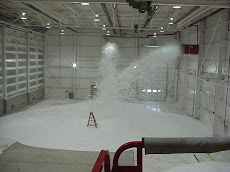
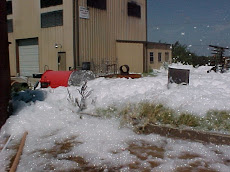
Then, there's the eruption that results when you drop a Mentos candy into a carbonated beverage. Some chemists argue it stems from bubbles forming on the surface of the Mentos, but I think they're all wet. I've seen the same effect with a root beer float and by adding saccharine to hot tea: it's surface tension. When two soluble components are added together, surface tension decreases (per the Gibbs isotherm equation). The opposite result occurs when two insoluble or semi-soluble components are mixed together. Because Mentos are soluble in the pop, the surface tension drops and a geyser erupts. TV's MythBusters concluded that the pitting of the Mentos candy creates abundant sites for nucleation (http://dsc.discovery.com/tv-shows/mythbusters/videos/diet-coke-and-mentos-minimyth.htm). They forgot that you still have to get the carbon dioxide to form. The extensive surface area is a factor, just like the saccharine in my tea. This may seem far afield from our business but it isn't. Improper use of a surface-tension-decreasing foam was to blame for a fatality at Millennium.


lunes, 4 de marzo de 2013

ALCOHOL VS QUATS AS SANITIZERS

What are quat-based hand sanitizers? How do they work?
Quat-based hand sanitizers are made with quaternary surfactants that destroy the cell integrity of bacteria and germs.  
 Dan Renner, Director of Marketing, Kutol Products Co., Sharonville, Ohio 


Quat-based sanitizers have additives to increase their antimicrobial effectiveness.
 Katharina Versluis, Marketing Manager, Gent-l-kleen Products Inc., York, Pa.

Quats are Quaternary Ammonium Compounds (QUATS) and the more common ones used are benzethoniumchloride (BEC) or benzalkoniumchloride (BZK). QUATS are typically found in hard surface type sanitizing applications ‚Äì inanimate, nonliving surfaces. This versus alcohol which is used in sanitizing applications on living tissue, i.e. skin. 

Studies have shown that QUATS are more irritating to the skin and they are not good for the environment. Further to this, the FDA has not approved the use of QUATS as a leave on application; they must be rinsed off. In recent years, the FDA has been enforcing its rulings requiring companies who manufacture QUAT based products to remove or change claims that market the product as a leave on hand sanitizer.  

QUATS work by breaking down the cell walls and ultimately killing the germ, thus contact time is important to ensure kill. Alcohol (at the FDA recommended level of at least 60 percent) kills germs on contact which usually means within the 15 seconds that it was tested to. Currently, the FDA guidelines state that hand sanitizers must contain at least 60 percent ethyl alcohol and BSCs should look for this on the label as a standard.  And, as of this date, the FDA has not approved non-alcohol based hand sanitizers for use as leave-on products; again, they must be rinsed off.
 Lori Huffman, Head of Marketing, North America, STOKO An Evonik Brand, Greensboro, N.C.


Do non-alcohol-based hand sanitizers, such as quat-based sanitizers, have benefits over alcohol-based products? Any facilities I should or should not use quat-based sanitizers?
Yes, quat-based hand sanitizers are not flammable, do not sting on cuts and chapped hands and have a pleasant scent versus alcohol based sanitizers.  Schools and prisons are ideal for quat-based sanitizers, where the dangers of alcohol based products may be a concern.— Dan Renner, Director of Marketing, Kutol Products Co., Sharonville, Ohio 


Quat-based products have a greater risk of causing contact allergies and can leave a sticky residue on skin. Additionally, these sanitizers can become more easily contaminated. Depending on the percentage of Ethyl Alcohol in the product, alcohol-based sanitizers have have been proven to kill 99.99 percent or more of (bacteria) micro-organisms.
 Katharina Versluis, Marketing Manager, Gent-l-kleen Products Inc., York, Pa.


Because the FDA has not approved QUATS as a leave on product, together with issues of less desirable skin compatibility and environmental friendliness, we do not recommend sanitizers that contain these ingredients.  
 Lori Huffman, Head of Marketing, North America, STOKO An Evonik Brand, Greensboro, N.C.

jueves, 28 de febrero de 2013

WALNUT SHELLS IN INDUSTRY

Walnut shells are used in many polishing and/or deburring applications. Walnut shell media is used for polishing or cleaning fine metals, alloys, mechanical parts, shell cartridges, eye glass lens, rocks, stones, coral, ivory, beans, and seeds.
Jewelers use walnut shell media treated with rouge in both tumbling and vibratory applications for polishing gems and fine jewelry.
When polishing the media size should be small enough to freely pass through openings or large enough to avoid lodging in openings or crevices.
Ground walnuts shells are a type of abrasive blast media used for cleaning. Typical substrates are metals, fiberglass, woods, plastics and stone. The walnut shells are ground to various sizes from coarse to extra fine depending on the application. The walnut shells are used in the same manner as typical blast media. Walnut shells are durable and can be re-used in many applications. Walnut shells can remove matter from surfaces without scratching or pitting underlying material.
Walnut shell is used in many applications as a filler or extender. Paint and coating materials, resins, pigments, plywood, adhesives, ceramics, dynamite, tile and livestock feed just to name a few. Media sizes vary from coarse walnut shell to walnut shell flour.
Walnut shell is used as lost circulation material to combat typical operational problems associated with drilling mud losses. Walnut shell is an easy and efficient solution to lost circulation problems. Walnut shell does not significantly change mud properties and can be removed and perhaps recycled with ease. Walnut shell is available in coarse, medium and fin grit sizes.
 
Walnut shell is biodegradable, non-toxic, environmentally safe and cost effective for blasting. Walnut shell does not cause silicosis.
The cosmetic industry uses walnut shell media as an exfoliate in facial, body and foot scrubs. Walnut shell is used by many, from the novice soap maker to the commercially distributed cosmetic lines. Eco-Shell will aid in formulating the custom grit sizes desired.
Walnut shell is used in many applications as a filler or extender. Paint and coating materials, resins, pigments, plywood, adhesives, ceramics, dynamite, tile and livestock feed just to name a few. Media sizes vary from coarse walnut shell to walnut shell flour.
Safety/Environmentally Sound
Non-toxic and biodegradable
Requires no flammable solvents
Dust free
Natural product
Use required on most U.S. Government contracts
Found not to cause Silicosis (can occur from use of sand or silica products)

Cost Effective
Cleans without leaving scratches or pitting
Cleaned parts require no additional machining or fitting
Cleans precision parts without a change in dimensions
Non-corrosive
Lightweight
Pollution prevention

Fast

Surface areas require no drying time
Easy to use
Fast clean up after use
Easy disposal process

Elasticity and Durability

Resistant to rupture and deformation
Limited breakdown
Can be re-used in various applications
 
Inventoried Media Sizes
4/6 12/20 20/40 60/100 -100
6/10 14/30 35/60 60/200 -200
8/12 18/40 40/60 60/200-10.5 -325
4/20 20/30 40/100 70/200
Custom sizes available upon request. Please contact our sales staff at info@ecoshell.com.
Eco-Shell, Inc.

MASON WITH GREAT QUATERNARY COMPOUNDS GOES TO PILOT

CINCINNATI, Jan. 9, 2013 /PRNewswire/ -- Pilot Chemical Company announced today that it has acquired Mason Chemical Company, based in Arlington Heights, Illinois. Together the companies represent more than 100 years of successful family-based ownership and leadership as privately held businesses in the United States.
"Both Pilot, established in 1952, and Mason, founded in 1968, are successful companies built by their respective founders' families over many decades," said Paul Morrisroe , chairman and CEO of Pilot Chemical Company. "The Pilot and Mason product lines are complementary and will allow us to build on synergies between the two companies. Customers of both companies will be better served through a more complete and expanded global product offering from Pilot."
Mason Chemical Company is a leader in the development, registration and sale of quaternary ammonium compounds and related chemistries. The acquisition enhances Pilot Chemical's household, industrial and institutional, personal care and oil and gas product portfolios, strengthening its offering by adding registered and non-registered biocidal quats and tertiary amine derivatives.
"Mason and Pilot share a strong history of innovation in the chemical industry," said Gregg Mason , owner of Mason Chemical Company. "Having both of our product lines available from one source makes strategic sense. Together we can leverage our combined technologies, offering new solutions to our combined global customer base."
"Our goal is to be a leading provider of chemistry based solutions," said Pam Butcher , president and COO of Pilot Chemical Company. "Acquiring Mason Chemical illustrates our commitment to providing a broader product portfolio, new technology and applications expertise to better serve our customers."
Financial terms of the agreement were not disclosed.
About Pilot Chemical CompanyPilot Chemical is a privately owned and independent global specialty chemical company providing high quality products and services to the household and industrial detergent, personal care, lubricant, oilfield, emulsion polymerization, textile and agriculture industries. Proprietary core technologies involve alkylation, sulfonation, sulfation and a number of other specialty operations. Pilot, an industry leader in chemical innovation and safety, owns the most state-of-the-art continuous sulfation process in North America and is the world's largest manufacturer of disulfonates. Pilot Chemical Company is headquartered in Cincinnati, Ohio. To learn more, visit www.pilotchemical.com.
About Mason Chemical CompanyMason Chemical Company is a leading supplier of specialty chemistry to a broad range of industries. In business since 1968, Mason is known around the world as a market leader in the supply of EPA-registered actives and prototype formulations. Mason, a privately owned specialty chemical solution provider, serves the personal care, HI&I cleaners, textile, oilfield and other markets. For more information, visit www.masonsurfactants.com.

SOURCE Pilot Chemical Company

miércoles, 9 de enero de 2013

ONE FACT ABOUT SUGARS


As you can understand, not all sugars are the same, and obviously some are better than others.
Following is a link to a presentation by a known scientist that makes emphasis on what is not advisable for consumption and what can contribute to obesity.

 It is a long presentation but is very worthwhile.


Vistas de página en total

GREEN CHEMICALS

The Green Seal certification is granted by the organization with that name and has a great number of members contributing with the requirements to pass a raw material or a chemical product as "green". Generally for a material to be green, has to comply with a series of characteristics like: near neutral pH, low volatility, non combustible, non toxic to aquatic life, be biodegradable as measured by oxygen demand in accordance with the OECD definition.
Also the materials have to meet with toxicity and health requirements regarding inhalation, dermal and eye contact. There is also a specific list of materials that are prohibited or restricted from formulations, like ozone-depleting compounds and alkylphenol ethoxylates amongst others. Please go to http://www.greenseal.com/ for complete information on their requirements.
For information on current issues regarding green chemicals, see the blog from the Journalist Doris De Guzman, in the ICIS at: http://www.icis.com/blogs/green-chemicals/.
Certification is an important — and confusing — aspect of green cleaning. Third-party certification is available for products that meet standards set by Green Seal, EcoLogo, Energy Star, the Carpet & Rug Institute and others.
Manufacturers can also hire independent labs to determine whether a product is environmentally preferable and then place the manufacturer’s own eco-logo on the product; this is called self-certification. Finally, some manufacturers label a product with words like “sustainable,” “green,” or “earth friendly” without any third-party verification.
“The fact that there is not a single authoritative standard to go by adds to the confusion,” says Steven L. Mack M.Ed., director of buildings and grounds service for Ohio University, Athens, Ohio.
In www.happi.com of June 2008 edition, there is a report of Natural formulating markets that also emphasises the fact that registration of "green formulas" is very confused at present, due to lack of direction and unification of criteria and that some governmental instittion (in my opinion the EPA) should take part in this very important issue.