7 times a day, low cholesterol diet
Main principles:
1- do not mix carbohydrates (Flour, bread, pasta) with proteins (meet, chicken, eggs, fish)
2- no sugar, only natural from fruit and vegetables (splenda or equal allowed)
3- eat seven times a day but reduced quantities
4- all cooking and salads with olive oil
5- Drink Water when hungry between food brakes.
Select one from each alternative given on each eating break
Waking up:
1- Glass of water
2- Coffee, tea
3- Orange juice
Breakfast:
1- two slices of integral bread (whole wheat, oats, etc) with marmalade,( no butter)
orange juice and/or coffee, tea
2- One banana or papaya or melon slice, with natural juice and crackers with low fat white cheese
3- Cereal bowl, shredded wheat, corn, rice or other with no sugar,2% fat milk. (Can add fruit). Best add honey. Coffee,tea
4- Omelets with vegetables but using only egg’s whites and white rice or integral bread.
10.30 am break:
1- Cereal bar or protein bar with juice or water
1- Coffee no sugar but splenda or equal integral crackers, water
2- Yogurt low fat, water
3- Banana or apple, water
4- 2 Boiled egg only white
5- Turkey breast sandwich with integral bread
Lunch:
1- Fish fillets (oven or fried in olive oil) with any type of vegetable salad or steamed vegetables. Rice is allowed.
2- Chicken breast with any salad or steamed vegetables. Rice is allowed
3- Turkey roasted or oven cooked with any salad or steamed vegetables, Rice
4- Stewed meet cubes with vegetables and salad. Rice allowed
5- Beef steak on grill or fried with olive oil and rice. Vegetables and salad.
6- Vegetable soup or chicken broth. Roasted chicken or turkey or rabbit. Rice allowed
7- Pasta with tomato or garlic or vegetable sauce, No meet.
3.30 pm Break:
1- yogurt with integral crackers
2- Cereal bar with water
3- Fruit and water
4- Integral bread and honey
5- Integral cracker and low fat white cheese
6- Fruit juice and integral cracker
Dinner:
1- Tuna fish (a can or natural if available) with salad
2- Salad with feta cheese and integral crackers
3- Whole grain cereal with low fat milk and honey
4- Vegetables with boiled eggs whites
5- One low fat ice cream
6- Potato puree no butter one portion, with salad
7- Steamed vegetables with low fat white cheese
8- Fruit and cereals no sugar, low fat milk.
Before bed:
1- Manzanilla, tilo tea or green tea no sugar or with honey
2- One low fat pop corn
3- Low fat ice cream
4- Yogurt
5- Glass of low fat milk
6- Carrot or papaya or melon
In bed:
1- Glass of water
2- Manzanilla tea, no sugar
EAMG606060
miércoles, 7 de abril de 2010
THE CHEMISTRY OF GOOD DIETS


sábado, 20 de marzo de 2010
HOME MADE GLASS CLEANER
ADD TO 1 QUART EMPTY BOTTLE, HALF CUP DISHWASHING LIQUID, HALF CUP OF ANTISEPTIC ALCOHOL ( ISOPROPYL ALCOHOL), 1 QUART OF CUP OF VINAGER AND TWO TABLESPOONS OF LEMON JUICE. ADD FINALLY WATER TO FILL THE BOTTLE AND SHAKE; ........ YOUR GLASS CLEANER IS READY.
Rapid and quick measure of Chlorine content
Chlorine photometer kit
The eXact® Chlorine Photometer Kit, the latest product from Industrial Test Systems, directly tests Free and Total Chlorine at an expanded range of 0.01-11.0 ppm. The photometer uses a patented method using eXact® Micro reagent strip technology, eliminating the need for powders, tablets, and liquids. It provides results without the guesswork of color matching and meets 4500-CL-G requirement. The waterproof meter (IP-67) fits comfortably in your hand, has a built in sampling cell and comes with a five year warranty.
Industrial Test Systems Inc.
Rock Hill, SC
Tel: 800-861-9712 Web: www.sensafe.com
Taken from Water World Magazine, march 2010 edition
DESALINATION; The best alternative when potable water is too expensive to find
Desalination
A modular desalination and water purification system – originally designed for the US Military and disaster relief – is now available for municipalities. Available from Global Water Group, the system combines desalination using reverse osmosis (RO) technology with a second modular unit that employs the company's proprietary LS3 process for fresh water purification. Units are available in many different sizes, configurations and housings, and they can process volumes ranging from 25 gallons of potable water per hour to as much as 11,000 gph from seawater in one module.
Global Water Group Inc.
Dallas, TX
Web: www.globalwater.com
taken from WATER WORLD Magazine, March 2010 edition.
miércoles, 17 de marzo de 2010
THEORY OF FOAM CONTROL IN WATER BASED SYSTEMS
Taken from the Paints Magazine at the following link: http://www.pcimag.com/Articles/Article_Rotation/BNP_GUID_9-5-2006_A_10000000000000724034
Mechanisms for Combating Macro and Microfoam in Low-VOC Waterborne Systems
by Charles S. Douglas
Markus Hallack
Wernfried Heilen
Christopher Howard
Heike Semmler
January 1, 2010
In the early 1980s, the domestic ink and coatings industry began a major effort to provide products that would help coatings manufacturers lower VOC emissions. The industry used a number of approaches including, but not limited to, exempt solvents, increased solvent capture by the coatings formulators and water-based coatings.
Each approach had positive and negative considerations. Using solvents exempt from the EPA Method 24 calculations lowered VOC output but proved of little use due to limited solubility with certain resins. Use of solvent capture equipment was, and is a viable option but is constrained by the high capital and maintenance costs. Partially driven by innovations at that time, water-based systems presented the most economical means of compliance with evolving VOC and HAPS (hazardous air pollutants) regulations. However, the resins and emulsions used for these systems require surfactants (soaps) to make them compatible in an aqueous medium. Unfortunately, these additives, plus others used to enhance properties like pigment and substrate wetting, contribute to foam formation within inks and coatings.
Today, the need to lower emission levels even further – combined with multiple-purpose raw materials – creates an even greater likelihood of formulating clearcoats that foam. This paper investigates the use of organo-modified siloxane technology to control the proliferation of foam, while maintaining desired properties.
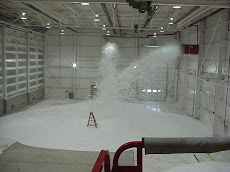
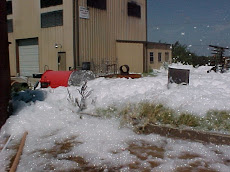
Foam is a mass of gas bubbles stabilized by a surfactant double layer – the foam lamella – within a matrix of liquid film formed in or on the surface of, in this case, an ink or coating. The word “in” refers to microfoam, while the word “on” suggests macrofoam (Figure 1). Let’s begin by looking at the characteristics of each type.
Macrofoam, found at the surface of a coating, contains bubbles – generally >100 µm– which rise very quickly. According to Stokes’ Law (Figure 1A), the size of the bubble markedly affects its velocity rising through the fluid, which is directly proportional to the radius of the bubble; thus, the larger the bubble, theaster its speed. Stokes’ Law also has a viscosity component: the velocity of the rising bubble decreases as viscosity increases. However, given the rather low application viscosities of water-based inks and coatings, along with their relatively low coat weights and thicknesses, foam should dissipate rapidly absent other contributing factors.(1, 2)
Previously mentioned factors that contribute to foam formation include surfactant packages in the polymer system and functional additives required to address key properties of the coating system. Generally speaking, many classes of defoamer will eliminate macrofoam (Figure 2) in inks and coatings since they are surface-active agents. By spraying the defoamer on top of the liquid film or adding it in the liquid phase, defoamers destroy the foam by acting within the foam lamella and destabilizing it. High-speed incorporation may not be required for this class of defoamers
Microfoam (Figure 3), on the other hand, becomes entrained within the liquid film because its small-radius bubbles do not rise fast enough to the surface. According to Stokes’ Law, these bubbles – typically 10 to 100 µm – rise infinitely more slowly than macrofoam in the same viscosity liquid. Consequently, because it remains entrained, microfoam causes numerous problems in post-cured film. Formulators must employ a very specific type of foam destabilization additive to remove microfoam from water-based surface coatings.
Many products on the market claim to eliminate foam from aqueous-based systems (Figure 4). Their performance relies on characteristics such as incompatibility, low surface tension, hydrophobic nature and other mechanisms to either prevent or destroy the foam lamella, or both.
In general, defoamers consist of several compounds, which, in total, are not compatible with the coatings system. If defoamers are too compatible with the system, problems arise, e.g., over time they become inefficient. However, if they are too incompatible with the system, the defoamers may be highly efficient bubble busters but will cause problems in the applied film. The ideal solution, then, is to balance compatibility and incompatibility for maximum efficiency.
Destabilizing agents are multi-component additives with varying groups of functional materials. There are three principal classes of components: carriers, representing 75-90% of the formulation; hydrophobic ingredients, ranging from 5-10%; and other special substances (e.g., biocides, thickeners, emulsifiers) representing 0-20%.
The purpose of the carrier is to spread on the surface and remove the layer of surfactant molecules. Therefore, it has a lower surface tension than water. Another important property of the carrier is to supply a means for the hydrophobic ingredients of the destabilizing package to reach the surfactant double layer. The carriers also have to be insoluble and incompatible with the solvent (water) to rise to the surface. The monolayer formed by the defoamer ingredients will have a lower surface elasticity compared to that of the foam bubble’s double layer. Oils can be the carriers for destabilizers. Mineral oils are the most versatile and least costly. Paraffinic (medical white) oils meet health regulations (FDA). In addition, vegetable oils, silicone oils, polysiloxanes, organo-modified siloxanes and water can all be used as carriers. Fatty acids, fatty alcohols and polyvinyl ethers are used as well.
A defoamer’s hydrophobic ingredients can be used either in liquid or solid form. In liquid form, they exist as emulsion droplets (Figure 5).
Particle size of hydrophobic materials is an important factor in penetrating the surfactant double layer (Figure 6). They must be between 0.1 and 20 µm. Too small a particle size significantly reduces effectiveness because water can enter the double layer and dilute the concentration of defoamer particles. If the particle size is too big, the particle cannot penetrate the double layer and the micro bubbles will not collapse into macro bubbles, which more easily burst on the surface. An important task of a hydrophobic ingredient is to absorb surfactant molecules from the double layer, thereby generating an increase in surface tension that facilitates spreading and the ultimate rupture of the foam lamella. The total concentration of hydrophobic particles in a defoamer formulation is limited due to the fact that the total concentration of surfactant molecules must be kept within a certain range to avoid destabilizing the coating emulsion. Compounds used as hydrophobic particles include waxes, fumed silica, metal soaps, polypropylene glycols, amides and polyurethanes.(3, 4)
Microfoam Issues
Several defoaming mechanisms readily dissipate macrofoam, but microfoam is different and a complex issue that requires addressing. Owing to its small bubble size, microfoam is generally not visible to the naked eye but its negative effects on a dried coating cannot be missed: surface defects, color control and clarity/haze.
Perhaps the most noticeable surface defect caused by microfoam is pinholing. On substrates that require a more homogenous coating for barrier properties, microfoam creates an avenue for environmental contact that can lead to weathering, deterioration or corrosion damage. Because microfoam is difficult to eliminate with traditional defoamer additives, new and different technology must be employed. The study that follows focuses on a foam destabilizer technology that uses polyether-modified siloxane chemistry with a hydrophobic component, hereafter referred to as a deaerator.(1,5-6)
The program to optimize the deaerating performance of polyether-modified siloxane explored the effects of adjusting a number of variables:
A.1 – Polarity – hydrophilic-lipophillic balance (HLB);
A.2 – Degree of polymerization (DP);
A.3 – Organic-siloxane ratio; and
A.4 – End blocking.
In this case, adjusting the HLB characteristics of substance Class A achieved significant improvements in deaeration. Varying the molecular weight changed the HLB character of some of the products shown in Figure 8. Organic modification changes of the products were also performed and the effects on microfoam elimination were tested.
Test results depicted in these micrographs clearly show that a product with strong hydrophobicity will not necessarily produce the best results (Figure 8). For efficient elimination of microfoam, a critical balance between hydrophilicity and hydrophobicity must be struck, as seen in the test coating system with substance A.1 (Figure 8).
To provide easier dispersion in a coating system, the active ingredients of the deaerator A.1 can be compounded in distinct forms: emulsion in water stabilized by surfactants; concentrate with 100% active matter; and dilution in glycols or glycol ethers.
The initial evaluation used the concentrate form of substance A.1; therefore, the next compositions created for testing were the emulsion and the dilution in glycol ether (Figure 9). The active ingredients in these two forms were equilibrated to deliver the same total amount of active matter in each test formulation. Comparing the micrographs in Figure 9, the concentrate version of A.1 undeniably provides superior microfoam dissipation.
A number of explanations exist for the lack of efficiency shown by the emulsion and the diluted variants, but the prevalent theory is that the non-concentrate forms of delivery have a higher solubility characteristic. Less of the active component reaches the liquid-air interface and cannot act on the foam lamella.(7)
This stage of the testing compared two versions of the same concentrate of Substance A.1: one without hydrophobic particles (A.1.1), the other with fumed silica hydrophobic particles (A.1.2). Micrographs of the two inks formulated with these products are shown in Figure 10. The performance of A.1.2 in Figure 10 clearly illustrates the value of including a hydrophobic component to increase foam destabilization efficiency.
Conclusion
Deaerators designed on an organo-modified silicone platform – more specifically, a silicone polyether containing hydrophobic moieties – provide superior macro- and microfoam suppression capabilities.2 In this study, TEGO® Airex 901W and Airex 902W have proven to be the most effective additives for dissipating microfoam in aqueous-based inks and coatings that contain high surfactant levels. Further investigation in numerous inks and coatings provided additional evidence that Airex 901W and Airex 902W are ideal choices in systems where it is difficult to eliminate both macro- and microfoam. (See suggested formulations in the Appendix.)
As the coatings market moves to more environmentally friendly systems that demand practically zero percent solvent usage, foam problems will be part of the equation. It will require joint efforts between the coating manufacturers, as well as additive suppliers, to continue the design and optimization of future eco-friendly products.
Appendix - Selected Formulations
References
1. Evonik Tego Chemie Service GmbH: Tego Journal 2007, 53-59.
2. US Patent 6045219 - Pigmented ink jet prints on gelatin overcoated with hardeners.
3. Adams; Vltasvsky; Heilen. The battle against the bubble. American Paint and Coating Journal 1990, 22, 32-34.
4. Streefland, W. Ink foaming of water-based inks, what is the reason and can it be resolved? FlexoTech News 2006, 9, 2-3.
5. Kleinsteinberg; Struck. Dealing with Foam Generated During Printing Ink and Varnish Production. Ink World 2006, 10.
6. Schwartz; Bogar. An additives approach to defect elimination in thermoplastic water-based industrial maintenance coatings. Journal of Coating Technology 1995, Vol. 67, No. 840.
7. Semmler and Heilen, “A New Approach to The Elimination and Prevention of Micro-foam in Water-based Wood and Furniture Coatings,” (Internal Document: Evonik Industries).
8. Kukackova, A. Using the Si-O Strength. European Coatings Journal 2007, Vol. 6, 54-59.
lunes, 15 de marzo de 2010
NEW DEFOAMER FOR WATER TREATMENT PLANTS
New Product: Microcat®-DF
A new defoaming liquid, known as Microcat®-DF Biodefoamer has been introduced by
Bioscience, (http://www.bioscienceinc.com/). The synthetic material can be used in aeration tanks, sludge digesters and other
wastewater treatment plant process facilities to suppress foam without inhibiting the biomass or
having other side effects of conventional defoamers.
Because Microcat-DF does not contain silicones, mineral oil, nitrogen or phosphorus
compounds, it is compatible with all Microcat microbial-enzyme formulations and with naturally
occurring biomass.
WWTP foams may result from filamentous bacteria
infestation, rapid temperature or pH fluctuations,
influent composition changes or shock loading. It can
also occur at plant start-up.
Infestation with filamentous micro-organisms, such
as Nocardia or Microthrix is often a symptom of
excessive fat, oil and grease (FOG) in the influent
wastewater. In this case, use of Microcat-DF with
Microcat-XF filament controller or other Microcat
products for digesting FOG, provides an economical
"green" solution to foaming problems, while also
reducing Nocardia that inhibit settling and produce poor effluent quality.
Microcat-DF is generally metered continuously into the foam source. The liquid has a shelf life
of two years without settling.
domingo, 14 de marzo de 2010
THE STANDARD COMPOSITION FOR TODAY'S ANTICORROSIVE COATINGS
For more than 100 years, the accepted system for anticorrosive coatings was a combination of lead based paints and oil alkyd layers.
A significant improvement was attained in the 1970s with the introduction of three-coat, high performance system based on zinc-rich primers, pigmented intermediates and light stable polyurethane topcoats for the industrial maintenace market. This three coat system is now the standard anti-corrosive coating system around the world, providing outstanding protection, chemical resistance and weatherability to bridges, petrochemical facilities, power generating plants, waste/water tretment facilities and industrial construction structures.
TRANSFORMING GRASS INTO PLASTICS
More and more attention is focusing on developing processes to make biofuels and biochemicals from non-food crops and cellulosic wastes. A leader in such efforts is Biofine Renewables, Waltham, Mass.
Since 2007, the company has operated a demonstration plant in Gorham, Maine, that's successfully converted cellulosic biomass feedstock into levulinic acid intermediates used in a variety of chemicals, plastics and fuels.
The good news is that everywhere there is immediate access to a low-cost feedstock that's high in cellulose, such as waste wood pulp. Today, though, such a material generally poses burdens not benefits.
The company's technology promises to change that. "Instead of having to pay to haul the waste away or just burning it in a boiler, they can convert it into chemical intermediates that have high values," Fitzpatrick, a company's speaker notes. "The process also generates a byproduct called lignin that can be burned to provide energy to the plant or nearby consumers." (Academic and commercial research underway may lead to use of lignin as a biochemicals feedstock or as non-biodegradable soil amender.)
New meaning to "magnetic" stirring
A new approach to using magnetism for mixing provides a simple and robust way to achieve instantaneous and homogeneous mixing at any scale, say its developers at Sandia National Laboratories, Albuquerque, N.M. The technique avoids agitators or other mechanical parts contacting fluid. Instead, it relies on magnetizable particles suspended in the fluid forming chains and then swirling to create effective mixing throughout the fluid. When mixing is done, a magnet can quickly and completely remove the particles, which can be reused, notes Jim Martin, a materials scientist at Sandia.
The method, called vortex field mixing, subjects particles to a rotating magnetic field with a precession-like motion. This causes the particles to assemble into a multitude of microscopic chains that follow the field motion and stir the entire volume of fluid regardless of the complexity its shape (Figure 1). (A YouTube video showing the mixing can be downloaded via http://www.youtube.com/watch?v=_2izq-XOvlg.)
jueves, 11 de marzo de 2010
SMART POLYMERS, The "Chameleon" principle
These very to-date technological advances in polymer science were taken from the American Coatings Show in Carolina, see www.american-coatings-show.com
By: Sergiy Minko, Clarkson University
Stimuli-responsive macromolecular nanostructures are capable of conformational and chemical changes upon “receiving an external signal” such as a change in temperature, chemical composition, applied mechanical force, irradiation with light, or exposure to an electrical or magnetic field. The changes at the molecular level are accompanied by variations in physical properties at a macroscale. These principles were explored in the development of reconstructable surfaces. Reconstructable surfaces change their wettability, permeability, and adhesive, adsorptive, mechanical, and optical properties. Various applications extend to materials with rapidly switchable adhesion (from sticky to nonsticky) and wetting (from wettable to non-wettable), with switchable appearance and transparency, and coatings capable of rapid release of chemicals, as well as self-healing coatings.
Reconstructable polymer surfaces form a toolbox for the rapidly developing field of smart coatings. The structure of the coatings can be programmed in the formulation. After deposition, external stimuli affect the spatial arrangement of the ingredients and direct the assembly of the coating with programmed properties.
By: Brij Mohal, Evonik
Smart coatings are often referred to as structured coatings which provide additional benefits by giving an appropriate response to outside conditions. There has been much talk about self-healing or super hydrophobic and hydrophilic coatings, to name a few. More examples will be given in this session, comprising dirt resistant coatings, as well as stimuli responsive polymeric polymers acting on demand. Other interesting developments are anti-fog coatings and the use of natural materials in order to achieve functionality.
By: Jamil Baghdachi, Eastern Michigan University
Introduction: Surface coatings function to protect or improve the appearance of a substrate or both. No matter how carefully the coatings are designed, manufactured and applied, all will eventually fail through some type of force in excess of the tolerance level of the coating or its ingredients. Failure of a coating system occurs by any number of failure modes and can often be attributed to a number of root causes including coating degradation, mechanical damage, or polymer fatigue upon service and exposure to elements of weather.
The concept of self healing materials has drawn significant attention of researchers all over the world.1-10 Self-healing and self-repair concept, using both organic and inorganic materials have been applied to composites, plastics, concrete, adhesives, artificial skin, and most recently to functional coatings.
In an effort to mimic self-healing functions in living systems, we have the developed polymeric coating systems that are stimuli responsive. The most attractive feature of this system is that the factors that damage the coating the most, such as humidity, exposure to high temperatures etc., are the same factors that initiate self-healing phenomenon (Figure 1). This property is unique since the extent of the healing is proportional to the magnitude of the damage, i.e., release on demand.
martes, 9 de marzo de 2010
HOW TO FORMULATE AN ANTI-ITCH CREAM
Dermatitis, Irritation and Eczema to the skin all cause eruptions, inflammation and itching. This last effect is probably the most annoying . Here is a simple and quick formula to temporary relief it:
Ingredients %Wt
Cetearyl Alcohol(and)
sodium Cetearyl sulfate.... 15.0
Salicilyc acid............. 0.4
Menthol ................... 0.3
Water ..................... 84.3
Put water in a container and heat to 70 Deg C. In a second container melt the Cetearyl ingredient at 70 Deg C and add the salicylic acid and the menthol with mixing, then add this blend to the water with stirring and allow to cool.
(taken from Happy.com, Feb 2010)
lunes, 1 de marzo de 2010
CHEMICAL CARTOONS

Taken from "Chemical Processing Magazine" :
"I don’t think that is what the boss meant when he said you needed to 'start walking the line.'" Submitted by Mervin Archer; Grove, Okla.
"Bob, you can't do a halfpipe, unless it's snowboard." Submitted by J.F. Kemiska
"Teddy Roosevelt didn't mean that when he said 'Carry a big stick.'" Submitted by Bob Beck; Pompton Plains, N.J.
Polymer Science applied to the Chemistry of Muscle Movement
All body movement depends on organic chemistry reactions or electrophysical chemistry. Muscle movement is an example.
The first molecular theories, which appeared in the '30's, were based on polymer science. They proposed that there was a rubber-like shortening of myosin filaments brought about by altering the state of ionization of the myosin. This aberration was corrected by the seminal works of HE Huxley (Huxley and Hanson 1954) and AF Huxley (Huxley and Niedergerke 1954) which showed that sarcomeres contained two sets of filaments (thick and thin) which glided over each other without altering their length. Hasselbach showed that the thick filaments contain the protein myosin. The question naturally arose; what made the filaments glide? Projections from the thick filaments, the myosin cross bridges, were discovered by electron microscopy (Huxley 1957; Huxley 1958) and subsequently shown both to be the site of the ATPase and also to be the motor elements producing force and movement between the filaments. Two conformations of the cross-bridge could be detected in insect flight muscle (Reedy et al. 1965). Progress was then rapid so that at a historic Cold Spring Harbor Symposium in 1972 the outline of the molecular mechanism of muscle contraction could be enunciated. The cross bridge was thought to bind to actin in an initial (90°) conformation, go over to a angled (45°) conformation and then release (Huxley 1969) (Lymn and Taylor 1971). For each cycle of activity one ATP would be hydrolyzed. The actual movement could be measured by physiological experiments on contracting muscle and was shown to be about 80-100Å (Huxley and Simmons 1971). Since the cross-bridge was known to be an elongated structure, such a distance could be accommodated by a rotating or swinging cross-bridge model (Fig 2) .
Why did it take so long to work out?
To understand the chemical events which drive muscle one needs to know the protein structures involved at atomic resolution. Muscle is made of massive arrays of macromolecules. How does one get data from such systems? A great deal of technology has been invested in this problem, which has also driven technology. Some early insight was provided by light microscopy. However, the first radical new insight came from electron microscopy. More recently, the structures of the component molecules have been determined x-ray crystallography at atomic resolution. These results now allow us to describe in some detail how the hydrolysis of ATP by the component proteins actin and myosin leads to movement. An understanding of muscle contraction is an important example of the success of protein crystallography, in particular when used in conjunction with high resolution electron microscopy.
NEWS ON CHEMICAL PRICES
Oil, Gas and Derivatives (Feedstocks)
Oil: A brief retreat from $80/ barrel this week yet today prices have pushed up considerably and pricing is once again fliriting with $80/ barrel.
Nat. Gas: Nat. Gas traded lower this week, starting around $5/ mmbtu getting as low as $4.75/ mmbtu and currently at $4.80/ mmbtu.
Ethylene: The ethylene market has been extremely active with February trading at $.565 cts/ lb, March at $.60 cts/ lb and April at $.5575 cts/ lb.
Benzene: Benzene has moved slightly lower this week ending at $3.27- $3.32/ gallon for March. We expect a slight decrease in the contract Benzene price from March.
Orthoxylene: March settled at $.47/ lb and based on nominations we expect a slight increase of 2-3 cpp for April.
Propylene: Refinery Grade Propylene is trading lower than the March settlement which increased a whopping 6.5 cpp. over January but Polmer grade is still trading in excess of the settlement. Ammonia: Pricing remains quiet at $275/ met ton yet forward price ideas are higher.
Chemicals
Methanol: Barge Pricing will "roll" into March at US$1.10/ gallon, spot has moved up to the high $.90's per gallon on news of an explosion at Petronas and other production issues. the Chinese holiday has ended and the spot market was not nearly as affected by the lack of demand during the holiday season as we saw last year.
Urea: Global pricing has escalated sharply as we enter a high demand season for Urea. Pricing has moved up steadily over the last few months.
Plasticizers: Feedstock pressure continues on price and another round if increases is slated for 3/1/10. DINP and DOP are considered tight as some operational issues are noted (2-EH) and Asian demand for ester and alcohol is ravenous.
Adipic Acid: Availability is limited pushing prices up and leaving some consumers struggling to keep inventories. A US major will bring down their only plant in the coming weeks further reducing availability in an already tight market.
Maleic Anhydride: Briquettes are selling at a premium if available. BASF's rationalization in Europe has radically affected the MA balance globally despite an overcapacity in NA. Molten material has moved on increased butane costs over the last couple of months yet due to the overcapacity spot deals are noted.
viernes, 26 de febrero de 2010
LAB HUMOR

-"Hmmm, you might want to update the MSDS . . ."
-"I didn't drink it, I swear!"
-"We want our products to be green, not our employees!!"
- "Could you finish this? I'm not feeling myself today."
TAKEN FROM "CHEMICAL PROCESSING MAGAZINE"
jueves, 25 de febrero de 2010
TRENDS IN FLOOR STRIPPERS
TAKEN FROM THE CLEANING CLEAN LINK'S EMAGAZINE...
Floor strippers are some of the most dangerous products in a cleaning professional's arsenal. These products, which vary widely in their formulations and levels of performance, can cause skin, eye and respiratory irritation as well as emit hazardous fumes.
There has been a recent push in the industry over the last few years, however, to develop products that are safer for cleaning crews, building occupants and the environment. In fact, end users can now use green floor strippers to create a healthier work environment.
SPONSOR LINKS:
Multi-CleanGreen clean using the Multi-Task patented dilution control system.Spartan BioBenewablesBiobased Cleaning Productsfor a Sustainable Future
Oh, The Odor
Traditionally, the key ingredient added to floor stripper formulations was ammonia, as it has the properties to unlock the zinc cross-linking bond found in metal interlocked floor finishes. Although ammoniated strippers worked particularly well, cleaning professionals who worked on the frontlines, can recall the shortcomings associated with these products.
"You would slosh that stuff on the floor and the ammonia would be so strong that you had to literally leave the room to get some fresh air," says Dave Collins, vice president of marketing and training for Gem Supply, an Orlando-based jan/san distributor. "Then you dash back in and started scrubbing it. They were nasty. They were high pH, plus the ammonia was overwhelming."
READ MORE:
WWW.CLEANLINK.COM Articles: floor care, floor strippers, green strippersRelated Topics: Finishes, Strippers & Cleaners, Products & CertificationsIndustry Articles: floor care, floor strippers, green strippers
While the focus of product development was once to create the strongest chemicals to complete a stripping job, manufacturers have tinkered with the chemical makeup of floor strippers over the last couple of decades to make them less harmful for cleaning professionals as well as the environment. In fact, one major change — to the delight of cleaning professionals and building occupants alike — has been the elimination of the strong odor that has long been characteristic of strippers. Manufacturers have removed ammonia from their formulations so the odor when stripping a floor is more manageable. Although ammonia is no longer a common ingredient, these low-odor products, which now contain amines, perform comparably to traditional products.
"The lower odor products have become more and more preferable," says Vince Sortino, vice president of sales, Philip Rosenau Co., Warminster, Pa. "People like the fact that it smells better and one of the benefits is that the cleaners that are using it also get the benefit of having a product that isn't unpleasant to work around."
Besides eliminating the pungent odor, manufacturers have followed industry trends by developing green floor strippers. While distributors say that traditional strippers may still be preferable for some floors, today's environmentally-preferable strippers can offer the same level of performance as their traditional counterparts — but at a lesser harm to the environment.
On top of formulating green floor strippers to be safer for the environment and cleaning personnel, manufacturers have upgraded these products' packaging materials to promote safer use. Many strippers today are packaged ready to use in dilution control systems. This helps reduce accidental contact with the skin because there is less chance for spilling or splashing when diluting the product, says Sortino.
Gone Green
When green strippers first came to the market a few years ago, distributors say end users questioned the product's effectiveness. In fact, the questionable performance and perceived higher price points deterred many end users from immediately making the switch to green, says Sortino.
"Like everything else, the predecessors of the current green products didn't perform as well," he says. "So when products came out that did do a pretty good job like a traditional stripper, it was a 'let's wait and see,' or 'let's try it and see how it performs.' And over the last couple of years we've gotten some really good products that have come out, work really well and are certified by Green Seal and EcoLogo."
For strippers to qualify for certification, Green Seal requires these products have a pH no greater than 11.5 and volatile organic compounds (VOCs) of 3 percent by weight at the greatest dilution and 7 percent for heavy build-up. Undiluted strippers should still not be corrosive to the skin or eyes. EcoLogo requirements state that strippers must have a pH no higher than 7 percent. Traditional products, comparatively, have a pH of 13 or 14 and are 10 to 30 percent VOC. These elevated levels of pH and VOCs means the solution has high levels of acid, are considered toxic and can result in poor indoor air quality (IAQ).
End users that once were reluctant to use green strippers just a few years ago are now finding these products to fit their floor care and sustainable needs. In fact, according to a 2009 survey conducted by Sanitary Maintenance's sister publication, Housekeeping Solutions, 75 percent of in-house service providers use green floor finishes and strippers in their cleaning programs (an increase of 20 percent from 2008). Building service contractors, however, have been a little slower in the adoption of green floor care practices, as 39 percent of contractors recently polled by Contracting Profits magazine, another sister publication of SM, are using green floor finish and stripper. This number is expected to rise in the near future, as 60 percent of BSCs polled who are not currently practicing green cleaning say they plan on changing to green finishes and strippers.
Educational facilities have been the leaders in the green floor care movement, says Mike Sulkin, president of LBH Chemicals & Industrial Supply Inc.
"It's being pushed by the parent-teacher associations and the parents," he says. "They read in the newspapers and hear the news that some of these chemicals are harmful to their kids. They don't want to send their kids to schools where they can get sick."
Green legislation has been passed in several states, including New York and Illinois that mandates green-certified floor care products, including strippers, be used in K-12 schools.
Green Limitations
Although some end users have gravitated towards green strippers, end users often gripe about their effectiveness when it comes to removing multiple layers of floor finish, says Pete Deverey, president of Tartan Supply, Brookfield, Wis.
Green floor strippers are best used in a floor care program that includes green floor finishes. Unlike traditional floor finishes, which have metal interlocks, green floor finishes have calcium interlocks that can be easily broken by the chemical composition of green strippers. When using a green floor stripper on a floor that has a metal interlock finish, distributors say it typically takes more stripping solution to break the metal bond in the finish.
"Does a green stripper that is designed to break a calcium interlock work as well on a traditional floor finish which uses a metal interlock? The answer is no," says Collins. "Because one is designed to break zinc and the other is designed to break calcium. But if I'm using a green finish, I can always use a green stripper to break it. But I can't always use a stripper on a non-green finish and make it work as effectively."
By using a green stripper on a non-green floor finish, some end users are finding themselves stripping floors more frequently to achieve the desired level of shine. Increasing the frequency of stripping and the amount of product being used has sparked debate among jan/san professionals on what it truly means to be green.
"The greenest chemical you use is the one you don't use," says Collins. "When we take green strippers and strip a floor three times a year or four times a year because the calcium based finishes as opposed to the metal interlock finishes don't hold up as well, and we strip, even if we're using a green finish, it's not very green. What the greenest thing to do is scrub the floor correctly and scrub and recoat for three to five years without stripping."
As the debate over whether it's better for the environment to do more passes using greener products, or to strip floors less often but with less environmentally-desirable products continues, support and education of how to properly use floor strippers will continue to play a large role in a facility's floor care success.
lunes, 15 de febrero de 2010
NEWS IN THE CHEMICAL INDUSTRY
Specialties spotlight
Many chemical players in mature markets see value-added products as vital to compete against low-cost commodities from Asia and the Middle East
FOR THE chemical industries of Western Europe, North America and Japan, the future seems to lie in specialties. But their transformation into sectors that are predominantly manufacturers of value-added products will probably be a slow process.
First, they have to downsize their commodity chemical businesses, which have been losing competitive advantage to producers
in the Middle East and the emerging economies, especially Asia and Latin America.
Restructuring of chemical production in favor of an expansion in specialities, in which mergers and acquisitions (M&As) will play a big role, could be particularly crucial to the prospects of the chemical industry in Western Europe.
Its commodity operations, especially in bulk polymers, are coming under intense pressure from low-cost producers in the Middle East. They appear to have no option but to move from high-volume, low-margin products to lower-volume, premium-priced chemicals.
The need for a specialties strategy is less urgent in the US, where relatively cheap natural gas is keeping down the feedstock costs of commodity producers. But even in North America, an expansion into specialties seems inevitable in the longer term.
The prospects of permanently high oil prices are a major handicap to commodity businesses without access to plentiful supplies of inexpensive feedstocks.
In addition, the increases in capacity for bulk chemicals and high oil prices are occurring at a time of uncertain recovery from an economic crisis, which is not over yet. Some multinational chemical companies are already planning for a double-dip recession.
"Previously, we've had an economic downturn with new petrochemical capacity coming on stream or a downturn with high oil prices," explains Paul Hodges, chairman of the UK-based consultancy International eChem.
"But we have not had all three - an economic crisis, high oil prices and new capacity occurring together. Restructuring will be inevitable and some of it may have to be quite radical and painful.
"Chemical companies in the developed world will have to exploit their expertise in chemistry by moving into the manufacture of more sophisticated chemicals in which they try to gain the benefits of lower operational costs. Or they will have to concentrate on being R&D [research and development]-based solution providers," Hodges believes.
Chemical companies in Europe, North America and Japan already dominate the global market for specialties. Now, with more producers in these areas wanting to become big specialty players, that supremacy will be considerably reinforced.
EXPANSION POSSIBILITIESLocal specialty producers are gathering strength in the emerging economies, particularly in China and India. But they are unlikely to be major global operators for several years.
"There are now many chemical companies and private equity funds wanting advice on how to expand into specialties," says Chris Stirling, a chemical consultant at the global consultancy KPMG , in London, the UK.
"It is the bottom of a cycle, so this is a good time to get into specialties. But large acquisitions will be difficult. Much of the activities could be in smaller takeovers with the main objectives being access to technologies and know-how," he adds.
"Restructuring will be inevitable"
Paul Hodges, chairman, International eChem German chemical major BASF's €3.8bn ($5.3bn) acquisition of Switzerland's Ciba Specialty Chemicals, completed last year, and US-based Dow Chemical's $15bn (€10.7bn) recent takeover of rival Rohm and Haas to become more of an asset-light, value-added player may ultimately be regarded as exceptions within a series of comparatively low-value M&As.
Takeovers are not being confined to commodity-oriented companies wanting a much bigger presence in specialties. Producers with sales that predominantly come from added-value chemicals are also striving to strengthen their specialty operations in order to make themselves more effective rivals in a marketplace where competition will become even fiercer.
Evonik Industries, the Germany-based chemical, energy and real estate conglomerate, a large proportion of the €16bn 2008 sales of which came from specialties, disclosed late last year that it was planning to sell off its nonchemical activities to become an even stronger worldwide operator in specialties.
Klaus Engel, Evonik's chairman, told the German media that the company aimed to expand in specialties through acquisitions, although he ruled out a rumored takeover bid for LANXESS, one of its major German competitors.
Belgian chemical and pharmaceutical group Solvay has made it clear that it will be using much of the estimated €4.5bn earned from its sale of its pharmaceuticals business to US pharma firm Abbott Laboratories to reinforce its functions in specialty chemicals and added-value polymers.
However, there are doubts about the speed with which companies can either switch to specialties or bolster their existing positions in the sector. Consequently, many of the acquisitions could be slow to materialize and only take place over an extended period.
"A major problem - particularly in the existing economic conditions - is that companies are not able to quickly dispose of commodity businesses," says Alexander Keller, a partner at the energy and chemical competence center of the global Roland Berger Strategy Consultants, in Dusseldorf, Germany. "In addition, there are not many good specialty businesses whose owners would want to sell them - certainly not for big deals. Companies want to stay in specialties rather than get out of them."
The Netherlands-based company DSM, already a major global player in specialties, wants to sell its commodity activities in fertilizers, melamine and elastomers in order to expand its core activities in life sciences and performance materials.
"We have said that we want to finalize the sales of these businesses this year," says Nico Gerardu, DSM's management board member responsible for performance materials. "The disposal of them has been a bit slower than originally anticipated, which is not surprising, given the current conditions in the market. This will not affect our current investment plans, but bigger acquisitions over €1bn will not be done before the finalization of these divestments."
CAUTIOUS APPROACHIn addition to delays stemming from lack of funds, companies will also be holding back on acquisition decisions until they have a clearer picture of what and where the growth opportunities will be in the post-recovery global economy.
"The way certain industries recover - such as automobiles and construction - will determine what sort of changes in strategy are made by chemical companies supplying these industries," says Saverio Fato, global chemical industry sector leader at global management consultancy PricewaterhouseCoopers.
When talking about areas for expansion, companies say they have pinpointed the likely major social and economic requirements for the next decade - such as energy efficiency and lower carbon dioxide emissions, food and nutrition, health and clean water. But often, they have not yet selected the key technologies to which they need access.
Geographically, they all tend to stress the necessity of having a strong presence in emerging economies, particularly China and
"Once customers do not need application support for a chemical, it loses its premium and starts to become a commodity"
Alexander Keller, partner, energy and chemicals competence centre, Roland Berger Strategy ConsultantsIndia. But the difficulty with these markets is that they may entail the use of a different business model from that employed by specialty chemical companies in Europe, North America and Japan.
Currently, the big attraction of specialty chemicals in developed markets is the premium prices that can be gained from product innovation and customer services, particularly in the technical backup provided to ensure efficient application of the chemicals.
"Once customers do not need application support for a chemical, it loses its premium and starts to become a commodity," explains Keller. "This has happened, for example, to a part of the paper chemicals portfolio, additionally driven by the fact that these are large customers in a highly consolidated industry."
Specialty chemical companies such as DSM use their close contacts with customers through their services network to detect ideas for innovations that will meet their customers' needs. Often, they jointly develop new products with their customers.
SPECIALTY INNOVATIONDSM has an open innovation policy to bring new technologies into the company from universities, research institutes and startups to develop them into new business platforms.
"We depend on customers for short-term innovations and on our open innovation system, combined with our own ideas, for longer-term development of new technologies," says Rob van Leen, DSM's chief innovation officer.
In emerging markets, however, customers do not place so much value on innovation and technical support as their developed-world counterparts. As a result, they are not so willing to pay a premium price for specialties.
"In markets like China, specialty chemicals are more price-driven and a significant share of customers are less educated in the use of high-end chemicals used in products in Europe and North America," says Keller.
"The European and US specialty companies will continue to hold on to the high-end sectors in these markets. The fastest-growing and most competitive parts of these markets will be in the low and middle range of chemicals, which will be more price sensitive with less demand for application support."
Over the next decade European, North American and Japanese specialty chemical companies wanting to be active internationally will have to be able to compete in the price-oriented emerging markets.
They will also have to be well placed in the markets of the developed world, which will still account for the majority of specialty chemical sales. That means investing money and resources into R&D operations and service networks manned by people with a lot of skill and know-how.
"Chemical companies are now having to give a lot of importance to gaining and retaining talent," says Fato. "The search for talent for innovation activities and front-line services will be a major driver behind acquisitions in specialties."
Not only companies but regions with chemical clusters, particularly in Europe, are trying to reinvent themselves so that with the help of local skills and expertise, especially in academia, they can become more reliant on specialties.
In Teesside, northeast England, where the main Wilton chemical complex has, in recent years, lost around one-third of its capacity in commodity chemicals, local specialty and fine chemical companies are collaborating to market each other's technologies around the world.
"We have such a rich vein of fine and specialty chemical companies, plus emerging bio-specialty companies, in the northeast of England," says Stan Higgins, CEO of the North East Process Industry Cluster (NEPIC) representing 500 companies, which is helping organize the collaborative effort.
In their drive to revitalize their activities in specialities, clusters in Europe have the benefit of decades of chemical production, a lot of it in added-value products. Many chemical companies do not have that advantage.
"A specialties business cannot be developed at short notice," warns Gerardu. "If you want to be successful in specialties, you have to have an infrastructure of people in innovation and services, and that cannot be built overnight. It is something that can take years to do."
domingo, 24 de enero de 2010
EPA new move towards letting people know on dangerous chemicals
Subject:
U.S. Environmental Protection Agency Weekly Digest Bulletin
U.S. Environmental Protection Agency Weekly Digest
FOR IMMEDIATE RELEASE January 21, 2010
EPA Increases Transparency on Chemical Risk Information
Action part of continued comprehensive reform of toxic substance laws
WASHINGTON — As part of Administrator Lisa P. Jackson’s commitment to strengthen and reform chemical management, the U.S. Environmental Protection Agency (EPA) today announced a new policy to increase the public’s access to information on chemicals. Starting today, EPA has announced its intention to reject a certain type of confidentiality claim, known as Confidential Business Information (CBI), on the identity of chemicals. The chemicals that will be affected by this action are those that are submitted to EPA with studies that show a substantial risk to people's health and the environment and have been previously disclosed on the Toxic Substances Control Act (TSCA) Chemical Inventory. This action represents another step to use the agency’s authority under the existing TSCA to the fullest extent possible, recognizing EPA’s strong belief that the 1976 law is both outdated and in need of reform.
“Assuring the safety of chemicals is one of Administrator Jackson's top priorities for EPA's future,” said Steve Owens, assistant administrator for EPA’s Office of Prevention, Pesticides and Toxic Substances. “The American people are entitled to transparent, accessible information on chemicals that may pose a risk to their health or the environment. We will continue taking steps that increase transparency and assure the safety of chemicals in our products, our environment and our bodies.”
Under TSCA, companies may claim a range of sensitive, proprietary information as CBI. Under Section 8(e) of TSCA, companies that manufacture, process, or distribute chemicals are required to immediately provide notice to EPA if they learn that a chemical presents a substantial risk of injury to health or the environment. The Section 8(e) reports are made available on EPA’s Web site. However, until today, companies would routinely claim confidentiality for the actual identity of the chemical covered by the Section 8(e) submission, so the public posting of the information would not include the name of the chemical. The new policy announced today ends this practice for chemicals on the public portion of the TSCA Inventory. This new policy will increase the amount of information available by granting the public access to the chemical identification information submitted, along with other health and safety data under Section 8(e).
In the coming months, EPA intends to announce additional steps to further increase transparency of chemical information.
EPA’s new policy on TSCA Section 8(e) submissions is being published in the Federal Register.
More information on the new policy: http://www.epa.gov/oppt/tsca8e/
More information on EPA’s principles for comprehensive TSCA reform: http://www.epa.gov/oppt/existingchemicals/pubs/principles.html
martes, 19 de enero de 2010
ODOR CONTROL BY HYDROGEN PEROXIDE
Many of us know the advantages of using Hydrogen Peroxide as a safe bleaching agent on fabrics, even colored ones, , as a stain remover in carpets and walls, and also as a great disinfectant and antiseptic solution.
However great applications are being preferred for odor control, specially in waste water treatment plants, sewage treatment; utilizing wet scrubber or direct injection oxigenation, avaiding use of Caustic or Chlorine Bleach solutions.
The Hydrogen Peroxide in addition to high grade aeration, is used to control sulfide gas odors ( rotten eggs), by converting it into sulfates and avoiding corrosive sulfuric acid formation. Hydrogen Peroxide reaction and degradation products are environmentally safe, mainly water and oxigen. For more information, can go to Water World magazine January 2010 edition, www.solvay.com (INTEROX) or www.eco2tech.com.
Chemtron in Florida , www.chemtron.com has a product for this application under the name of: Oxy Treat 28.
viernes, 15 de enero de 2010
IMPORTANCE OF PROPER DISPOSAL OF FEMININE HYGENE PRODUCTS
Feminine hygiene products typically receive very little attention, even in the jan/san market. The industry is still predominantly men, who might not fully understand women’s issues or realize the inherent problems that women have. This lack of understanding is why it is important for jan/san distributors to keep feminine hygiene products in mind when discussing the restroom with their clients. It’s a matter of educating the customer on the importance of feminine hygiene products, letting them know what products are available and informing customers of their benefits. When discussing feminine hygiene with their customers, distributors should stress the importance of proper disposal options, in addition to offering convenience with dispensers, tampons and pads. Even though stall receptacles have a low price point, many facility managers overlook their need, assuming women will dispose of sanitary products in the regular waste receptacle. In reality, many women flush them down the toilet, resulting in potential clogs. The distributor salesperson should help customers understand that a $20 receptacle can save hundreds or thousands of dollars in plumbing bills.
Emptying any waste receptacle has a certain level of safety concern connected to it. Coming into contact with biohazards, harmful chemicals, sharp objects or bodily fluids is always a threat for cleaners, and waste receptacles in restrooms are no exception. Although feminine-hygiene waste includes blood, cleanup of these products does not fall under the Occupational Safety and Health Administration’s (OSHA) bloodborne pathogens standard. Red-bagging is not required, however, OSHA does “expect products such as discarded sanitary napkins to be discarded into waste containers, which are lined in such a way as to prevent [cleaner] contact with the contents.” Receptacles found in the stall units typically use anti-leak plastic or wax-coated paper liners to collect waste. The wax option sits up straight in the unit, but can’t be tied up when thrown out. The plastic liners collapse and must hang over the edge of the unit, but they can be tied up for easy emptying. These plastic liners also come in biodegradable and perfume-impregnated varieties. No matter which liner is used, cleaners should always wear gloves and use caution when collecting waste from disposal units. Once out of the stall, bags should be placed in the regular waste receptacle before being thrown into the garbage.
MICROFIBER MOPS / FLOOR CLEANING
In a profession where repetitive motion and heavy lifting is always problematic, lightweight microfiber products are a welcome solution. In fact, microfiber has become widely available in all types of cleaning tools today and is most pervasive in mops. While traditional cut-end mops still make up a large portion of mop demand, there is a growing trend toward using high-quality looped-end and microfiber products. The popularity of microfiber has a lot to do with its functionality as the fiber can be used wet or dry, and with conventional, flat and dust mops. In addition to being lighter than a traditional fiber, microfiber reduces water and chemical usage. Microfiber also addresses another pressing concern, particularly for foodservice and healthcare facilities: cross-contamination. A microfiber pad can be used once, easily replaced with a fresh pad, and — if the cleaning solution remains untouched by a dirty pad — no cross-contamination will occur. Color-coding can also be done with microfiber tools. This reduces the risk of cross-contamination by ensuring certain colored tools are only used in specific areas. A tremendous benefit is that microfiber pads can be laundered and used hundreds of times.
COMMENT
SEE: cleanlinkminute@cleanlink.com
jueves, 7 de enero de 2010
EPA WILL LIST FORBIDDEN CHEMICALS
EPA Plans to List ‘Chemicals of Concern’
According to GreenBiz.com, the U.S. Environmental Protection Agency has announced plans to establish a “Chemicals of Concern” list and is beginning a process that may lead to regulations requiring significant risk-reduction measures to protect human health and the environment.
The agency’s actions are being undertaken under its authority of the existing Toxic Substances Control Act (TSCA), recognizing EPA’s “strong belief” that the 1976 law is both outdated and in need of reform.
In addition to phthalates, the chemicals EPA is addressing are short-chain chlorinated paraffins, polybrominated diphenyl ethers (PBDEs) and perfluorinated chemicals, including PFOA. These chemicals are used in the manufacture of a wide array of products and have raised a range of health and environmental concerns.
EPA also recently announced that three U.S. companies agreed to phase out DecaBDE, a widely used fire retardant chemical that may potentially cause cancer and may impact brain function.
Last September, Administrator Lisa Jackson outlined a set of agency principles to help inform legislative reform and announced that EPA would act on a number of widely studied chemicals that may pose threats to human health. When TSCA was passed in 1976, there were 60,000 chemicals on the inventory of existing chemicals. Since that time, EPA has only successfully restricted or banned five existing chemicals and has only required testing on another two hundred existing chemicals. An additional 20,000 chemicals have entered the marketplace for a total of more than 80,000 chemicals on the TSCA inventory.
This is the first time EPA has used TSCA’s authority to list chemicals that “may present an unreasonable risk of injury to health and the environment.” The decision to list the chemicals further signals this administration’s commitment to aggressively use the tools at its disposal under TSCA. Inclusion on the list publicly signals EPA’s strong concern about the risks that those chemicals pose and the agency’s intention to manage those risks. Once listed, chemical companies can provide information to the agency if they want to demonstrate that their chemical does not pose an unreasonable risk.
More information on EPA’s legislative reform principles and a fact sheet on the complete set of actions on the four chemicals can be found at http://www.epa.gov/oppt/existingchemicals.
jueves, 10 de diciembre de 2009
EFFECT OF HUMIDITY WHEN APLLYING FLOOR FINISH
The effects of humidity on the drying and performance of a floor finish is very important. High humidity retards the evaporation of water from the polish film, leaving the film soft, incompletely dry, and very Scuffable. Floor finish films, like latex paints, dry (harden) from the surface inward towards the flooring. Thus a floor finish which appears to be dry and feels dry to touch can in fact be wet and soft down close to the floor. Adequate ventilation during and after applying a floor finish is very important. If the air in the area being finished is high in humidity, close the windows and run the air conditioner to lower the humidity. In the winter, turn up the heat to dry the air and also warm-up the substrate (flooring). Problems caused by high humidity are: Another important aspect in the drying of floor finish is the correlation between drying time and solids of the finish. Higher solids results in a thicker film developing on the floor and thus, a greater period of dry time being required between coats (sometimes in excess of one hour).
1. Excessive scuffing and black marking from traffic until finish dries hard.
2. Poor detergent and water resistance due to the delay in finish cross-linking.
3. The threat and reality of “gluing” furniture to the floor.
4. Streaking and mop drag created by the coat being applied “biting” into preceding coats. (this phenomenon is caused by the applied coat re-emulsifying the previous coating that has not yet cure.)
jueves, 3 de diciembre de 2009
LAS BONDADES DEL MAGNESIO PARA LA SALUD
MAS INFORMACION DE CLORURO DE MAGNESIO
Cloruro y magnesio (Cl y Mg): Éstos son otros dos importantes elementos de la sangre. El cloruro es particularmente importante para regular el equilibrio de líquidos en el organismo. El magnesio se encarga de las contracciones musculares y de sintetizar las proteínas.
El magnesio tiene múltiples acciones beneficiosas sobre el organismo. Se le puede considerar toda una defensa ya que contribuye a depurar la sangre, disolver los depósitos de colesterol de los vasos sanguíneos, activar y movilizar los leucocitos, y a favorecer la producción de anticuerpos,..
El magnesio es un metal divalente del grupo alcalino-térreo, que ocupa el sexto lugar en abundancia natural entre los elementos de la corteza terrestre. Aparece en combinación química con otros elementos, en particular, en los minerales carnalita, dolomita y magnesita, en muchos silicatos constituyentes de rocas y como sales, por ejemplo el cloruro de magnesio, que se encuentra en el mar y en los lagos salinos.
Es, además, un componente esencial del tejido animal y vegetal ya que está presente en todas las células; lo que explica su presencia en nuestra alimentación. El magnesio capta la energía solar y la potencia, formando compuestos químicos que los organismos son después capaces de sintetizar. Al mismo tiempo, permite liberar el oxígeno necesario para las funciones respiratorias.
Anti-estrés
La mitad del magnesio de nuestro organismo se encuentra en los huesos, y la otra mitad está implicada en procesos celulares, realmente importantes. Toma parte en el mantenimiento de la glucosa y otras partículas nutrientes, para que posteriormente se pueda aprovechar la energía de éstas.
Entre las principales funciones y propiedades del magnesio hay que destacar la activación de vitaminas, enzimas, la formación de estructuras óseas y dentales, proteínas y anticuerpos, el mantenimiento de la viscosidad del líquido sinovial y la ayuda en el metabolismo de síntesis de los lípidos. Además, tiene una misión anti-estrés, antitrombótica, antiinflamatoria y cardioprotectora.
Sin magnesio...
La falta de este mineral hace que los reflejos nerviosos y musculares se deterioren. Su carencia conlleva, además, vértigos, convulsiones y debilidad en los huesos, puesto que su presencia en ellos es muy importante. La escasez de magnesio está relacionada también con el aumento de la tasa de potasio.
Corregir las carencias
Cuando hay una carencia de magnesio en el organismo, ésta se puede corregir administrando diariamente magnesio
Es bueno para prevenir las enfermedades infantiles como la rubéola, sarampión, faringitis, viruela, tos ferina, alergia y en general todas las enfermedades que cursan con fiebre o inflamación.
Es muy bueno para prevenir las migrañas.
Es excelente para evitar la pérdida de audición que se produce por la exposición a ruidos más fuertes que los normales.
Es bueno para las embarazadas porque ayuda para disminuir la presión arterial. También es bueno para el dolor menstrual y otros síntomas que acompañan a la menstruación.
Sirve de broncodilatador pues relaja los músculos que rodean los bronquios y dicen que ha sido utilizado con éxito en ataque agudos de asma bronquial.
Reduce el riesgo de cálculos renales porque aumenta la solubilidad del calcio en la orina.
miércoles, 2 de diciembre de 2009
THE GREAT VERSATILITY OF POLYURETHANE EMULSIONS
Innovation formulas from Bayer.
The aqueous 1K polyurethane dispersion solution for all indoor wood and glass coatings
Bayhydrol® UH 2593/1 is a unique binder that adds value to your formulations for parquet, furniture, joinery and glass coatings. Durability, drying speed andappearance are the attributes that describe the product best.The ecological, green label is not only because it is a solvent free aliphatic polyurethane dispersion, but it is also based on renewable resources - fatty acids. The latter undergo self crosslinking properties eventually leading to its high performance.
In Parquet Coatings:
Bayhydrol® UH 2593/1 provides very high black heel mar resistance (BHMR) and surface hardness. The transparency, wood warmth and gloss make the product particularly interesting for formulating glossy coatings. The easiness of downglossing and the fast drying lead to excellent semigloss and matt finishes.
Crosslinking with Bayhydur® 305 increases coating resistance while keeping the excellent transparency and wood warmth. Bayhydrol® AH XP 2741 is the first choice for PAC blending due to the high compatibility.
Get Technical Assistanceon coatings formulations containing polyurethane dispersions.
In Furniture Coatings:
Bayhydrol® UH 2593/1 brings high blocking resistance and scratch resistance to the coating. Therefore it's an interesting partner for blending with acrylic dispersions in 1K-WB coatings. Stain blocking is excellent, so it's an ideal choice for formulating 1K clear primers. The fast drying and high transparency are the advantages of Bayhydrol® UH 2593/1 as blending partner in the 2K-WB coatings (see graphs below). Very promising results are achieved also in waterbased UV-curing coatings, where the addition of Bayhydrol® UH 2593/1 to the polyurethane dispersion for UV curing improves the water releaseof the coatings and reduces the white pores effect significantly.
lunes, 23 de noviembre de 2009
NEWS AND FUTURE TRENDS IN HOME FRAGRANT AIR FRESHENERS
This article was taken from a publication on September 2009 edition, of HAPPI Magazine:
House guests with a spray of fragrance is said to be a Mediterranean tradition. And why shouldn’t it be commonplace in every home? Domestic scenting products are classically known as affordable, easy ways to provide a put-together and pleasant environment in a jiffy. A quick spritz of a lemon spray or lighting a lavender candle can work wonders in eliminating unsavory odors—even providing an aromatherapy boost to boot. Despite the benefits and in correlation with the recession of 2009, there has been a significant downshift in the home fragrance market. Total sales of the category, which includes home air fresheners and candles, fell 11% to $1.5 billion for the year ended July 12, 2009 in supermarkets, drugstores and mass-market retailers excluding Wal-Mart, according to Information Resources, Inc. (IRI), a Chicago-based market research firm. Super brands like Glade and Febreze still lead in both the air freshener and candle sectors, proving that shoppers are still trudging to mass-market stores for their home fragrance staples such as plug-ins, sprays and luminaries—but at a selective pace.While there have been a few glimmers of hope, the bleak economy in general continues to take a toll on the consumer products industry, noted Karen Doskow, associate project manager, Kline & Company, Little Falls, NJ. However, despite lackluster sales during the past year, the home fragrance market is well positioned to capitalize on the fact that, for a variety of reasons, consumers are spending more time at home.“To make the most of a tough situation, home fragrance marketers must retrench, reinvent and rethink their product development, distribution and marketing strategies in order to provide the kind of innovative products at an affordable price that consumers demand at this time,” noted Ms. Doskow. “Certainly, innovative delivery systems, repackaging and other product-centric innovations are a consideration, but marketers must also consider how and where consumers can access their products.”
Candles Light it UpHome fragrance is not only about scent; its design element is also imperative in creating a successful product, noted Simon Kneen, creative director, Banana Republic. He told Happi,“Candles in beautiful frosted or colored votives provide a sophisticated accent to any room. Home fragrance that looks great or has a strong architectural/design aesthetic has been successful in the past and will continue to be so in the future.”
An upscale room spray from Febreze for Fall 2009.Signature perfumes and colognes act as inspirations to the home fragrance market too, according to Mr. Kneen. For Fall 2009, Banana Republic is bringing back its popular Classic perfume in candle form. The top opens with juicy, sparkling notes of grapefruit zest and mandarin citrus, as the heart marries classic floral notes of lavender and exotic syringa flower with leafy silver sage. It dries down to blonde woods and musk—just as the eau de parfum (EDP). Marketers are also targeting the upscale consumer through mass to catch that shopper at an affordable price point. SC Johnson recently rolled out The Fragrance Collection by Glade, a line of gourmet-inspired candles available in scents such as lotus bamboo and acai. Meanwhile, Procter & Gamble launched the Febreze Home Collection, the brand’s first contemporary-scented and styled home décor line. The cornerstone of the collection is the Febreze Flameless Luminary. Its scented “shades styles,” as they are called, are available in fragrances such as pomegranate mango or green tea citrus. A wooden base activates a flickering, flameless glow and diffuses scents into the air via the shade. Seasonal offerings include cranberry pear, caramel crisp, orchard cider and vanilla frost.In addition to the Flameless Luminaries, the Febreze Home Collection offers the first soy blend candle for the brand, encased in glass with a bamboo base, as well as a room spray.“Over the past year, we have seen consumers continue to experiment with new air care product forms and scents in their homes,” said Cathy Beros, senior scientist, Febreze Home Collection Research & Development, Cincinnati, OH. “Consumers are enthusiastic about air care products that have a decorative design that will complement their décor.”Designs aside, sometimes it’s the scent that really makes a home fragrance product stand out, according to Rick Ruffolo, senior vice president of brand, marketing and innovation, The Yankee Candle Company, South Deerfield, MA. He tells Happi, “Without question, scented candles remain the single most popular way to enjoy home fragrance. When done right, scented candles make great gifts, are decorative and provide ambiance that other home fragrance devices can never match.”
Seasonal offerings from Chesapeake Bay Candle for Holiday 2009.In 2009, Yankee Candle’s best selling new fragrance introductions included Garden Sweet Pea, Lavender Vanilla and MacIntosh Spice. Mr. Ruffolo attributes his company’s success in the category to “seasonal relevance.”“We continue to see the importance of having the right scents at the right times of year. For instance, the food/spice category grows in importance and relevance as customers emotionally prepare for the Fall and Holiday seasons. Likewise, floral scents in the Spring, and fruit fragrances in the late Spring/Summer are ways for customers to integrate what’s going on in nature with the changing seasons into their homes,” he said. Mei Xu, owner/president of Chesapeake Bay Candle, Rockville, MD, agrees that a classic jar candle might just be the panacea for recessonistas craving a wallet-friendly new home fragrance item.“Value has been one of the strongest purchase decision drivers, and we have seen consumers trade down to more affordable candle and home fragrance solutions,” she told Happi. “Pillar candles and jars have regained popularity, as they allow consumers to combine décor and fragrance.”
The S-Pod from PartyLite.For Holiday 2009, Chesapeake Bay Candle will unveil a limited edition featuring “multi-note scents” of wild ginger cassis, Siberian fir pomander and black star anis in fragranced soy candles or reed diffusers. The candles are contained in a special edition silver mercury glass featuring the brand’s signature tree motif in clear glass—allowing the glow of the candlelight to shine through the mercury vessel. Items are wrapped in a gift box featuring silhouettes of blossoming trees spread over silver foil paper with ombre shading.
Sticks and Stones...and SpraysBesides the classic scented candle, air fresheners such as plug-ins or sprays are no longer just for the bathroom or kitchen. They have also become an important part of a home’s décor, noted market research firm Mintel.Due to their expanding role in the home, air fresheners are also appealing to varied demographics. Teenagers and homeowners who want to extend fragrance to more rooms than before are all being targeted, said Mintel in its report. Therefore, the top companies in the home air freshener segment are competing for the next best delivery system and are trying to keep up with the latest fragrance trends. While there is likely to be an increased focus on the home during the recession, air fresheners are discretionary purchases and will likely be one of those markets where consumers will look for better deals and may be more likely to purchase at mass merchandiser/discount stores, according to Mintel’s recent report on the market. Revamped delivery systems add decorative appeal to the product with aesthetic beauty, agreed Kline in its analysis. For example, Henkel’s Renuzit line has been reinvigorated with a modernizing spa-inspired upgrade to its familiar adjustable cone, including customizable wrappers that can be downloaded and printed for a personal touch to fit any decor. Further bolstering this steadfast brand, Henkel recently launched Crystal Elements, a set of scent-infused crystals in variations such as emerald rainforest or ruby berries, displayed in a decorative glass container. Portability is a big trend this season in home fragrance. Blyth’s PartyLite brand is building its client base with its new “fragrance on the go,” the S-Pod. Targeting all those smelly cars, purses, lockers, teenager rooms and offices out there, this travel-friendly scent device was designed to refresh anytime, anywhere and resembles an Apple iPod. It is available in four fragrances—French vanilla, strawberry fields, mulberry and calm waters—and is sold with a refill. Aura Cacia, a company that specializes in eco-friendly essential oils, is bringing spa-like benefits to the home with its new Aromatherapy Shower Tablets. The products are made with 100% organic essential oils and are available in lavender, eucalyptus or peppermint. The company also recently released a line of natural plug-ins. This collection of electric aromatherapy air fresheners features 100% pure essential oils to provide fragrance. The line is available in four aromas—lavender, lime and grapefruit, bergamot and orange and spices and clove.Fragrance sticks, or reed diffusers, are another popular delivery system for home fragrance. The natural wood gently draws the fragrance from essential oils usually housed in a glass jar into the air and gently evaporates into the surrounding room creating a long-lasting fragrance. Every couple of days, if the sticks get a little dry, simply turn them upside down and a fresh wave of fragrance will waft on by.Boutique brands such as Sweet Grass Farm, Greenland, NH, have found success in fragrance sticks. According to the company, these “unique and practical fragrance sticks” can be set up on a shelf, or in a powder room or bedroom. The company recently added ripe melon and citrus blossom fragrances to its roster of reed diffuser offerings; the company also will release a herb blossom linen spray and dusting oil for furniture outside of the wood stick range this season.Some marketers are focusing on glass jars that house the essential oils as ways to draw attention to their home fragrance collections. L’Occitane en Provence, a French body and skin care line, sells a line of reed diffuser sets inspired by the ink pots once used by schoolchildren.
Home Fragrance of the FutureWith most leading economists forecasting a weak recovery, there is still plenty of opportunity for home fragrance marketers to gain a foothold now and gear up for the future, noted Ms. Doskow of Kline. Retail sales of air care products are projected to increase by 12% between 2008-2013, according to Euromonitor International. One category that is expected to grow is electric air fresheners, such as plugs-ins, which may rise 3% between 2008 and 2013. Increasing commoditization is likely to lead to declines for gel air fresheners and other household air care, according to the report. Alyce Nicholsonsheehan, senior scientist, air care scent trends expert, P&G, sees the shift start with innovative new home fragrance variations. She told Happi, “Looking forward and with the economy in the doldrums, air care needs to catch a fresh new wind and breathe new life into our sails. I expect we’ll start to see some new scent notes within air care. Look for chic, feminine notes along with everyday, rugged masculine notes to be part of the fresh new beginnings.“While fruit notes and floral notes will always be part of the air care landscape, the passion will come from pushing the extremes of femininity and masculinity into new directions for air care,” she concluded.Ms. Xu at Chesapeake Candle agreed. “As far as fragrance trends are concerned, the most important trend for 2010 will be gourmand. Gourmand fragrances address the comfort trend—during these challenging times, people are seeking comfort to help confront daily financial and emotional stress.”Industry experts agree that this year, innovation and a little blood, sweat and tears could feasibly turn the home fragrance sector around. According to Ms. Doskow, “No doubt it will be a slow and steady climb, but the market is ripe for the leading consumer products companies to crank up the R&D engine and bring forth the next generation of home fragrance products. In this economy, it will take some landmark product and distribution initiatives to restore the market to the comfortable sales levels of its heyday.”
SIMPLE ASPECTS OF SHAMPOO FORMULATIONS
For the beginning cosmetic chemist, here’s a primer of the science, art and the secret tricks of the trade to create great hair shampoo, body wash and hand soap. The Formulation Basics for Personal Cleansers, is presented here as a very simple but complete base to formulate Personal care shampoos and is reported by Shoaib Arif Pilot Chemical Co.Cincinnati, OH.
(Disclaimer: The information contained herein is provided in good faith as starting guidelines to formulators and is based on the study in our laboratories and work of others. Pilot Chemical Company makes no warranties, expressed or implied, as to the accuracy of the information contained herein. Nothing contained herein grants or extends a license or permission in connection with patents of Pilot Chemical Company or others).
The ingredients used in a personal cleansing product, such as hair shampoo, body wash and hand soap, can be divided into four major categories: Primary surfactants, secondary surfactants, specialty ingredients and minor ingredients. This article examines each category and provides formulating tips to help the beginning cosmetic chemist create functional, yet aesthetically-pleasing products.Primary surfactants perform two important functions—cleansing and foaming. Desirable personal cleanser properties may also include quick and easy miscibility with water; instant flash foaming; nice, creamy lather that feels silky soft upon application, effective cleaning of soils from the hair and/or skin, quick and easy rinseability,and soft and silky afterfeel. Alkyl sulfates and alkyl ether sulfates such as sodium/ammonium lauryl sulfates and sodium/ammonium laureth sulfates, are cost-effective primary surfactants which are used in many personal cleansing applications. Alkyl sulfates and alkyl ether sulfates meet consumer demand for foam and lather as well as cleansing. These reasonably priced, high foaming surfactants have excellent cleansing properties. Most formulators prefer to use a combination of lauryl sulfate and lauryl ether sulfate. Lauryl sulfates produce creamier foam with higher volumes of small bubbles compared to ether sulfates. Conversely, ether sulfates, particularly the two and three moles (EO), produce better flash foam. To develop a product with optimum yet balanced lather profile, lauryl and lauryl ether sulfates are added in a certain range of ratios. For sodium lauryl sulfate and sodium laureth-2 sulfate a good starting ratio is 3:7 on an active surfactant amount basis. This combination of lauryl and laureth sulfate will give a nice, well-balanced lather profile that the consumer expects from a personal cleanser. This ratio is also a good starting point for viscosity response and short flow (non stringy) properties of the final product. Ammonium lauryl/laureth sulfates may be slightly better than their sodium counterparts in amount of foam generated, clarity at lower temperatures and viscosity response in certain formulas but they can release ammonia at higher pH. Some of the attributes that secondary surfactants impart to a formula include increased viscosity, stabilized foam and reduced skin and eye irritation. Personal cleansing systems based on alkyl sulfates and alkyl ether sulfates are relatively easy and cost effective for viscosity buildup. Generally speaking, a 10% active sulfate system will require about 1-2% of alkanolamide and 1-3% sodium chloride to reach or exceed a viscosity of 10,000 cps. Regarding rheology, this 3:7 lauryl to laureth sulfate ratio imparts a nice short flow for the system. Higher amounts of lauryl sulfates may cause stringy flow whereas the higher amounts of laureth sulfate will not have optimized creaminess of the lather and may not build maximum viscosity.
Developing a Shampoo FormulaIn the past, cocamide DEA was a common alkanolamide for viscosity building and foam stability, and some formulators still use it. It is a liquid material and has balanced properties for viscosity building as well as stabilizing the foam. Higher chain amides such as oleamide DEA will generally build higher viscosities (on an equal active basis) than its coco counterpart but the foam stability will not be as good as that obtained by cocamide DEA. Some formulators use cocamide MEA to avoid the DEA. Cocamide MEA will generally build somewhat higher viscosities than cocamide DEA, but not as high as oleamide DEA. The foam stability provided by cocamide MEA is comparable to that provided by cocamide DEA. Cocamide MEA is a waxy solid and requires heat to make the finished product. Salts, such as sodium chloride, increase the viscosity of sulfate-amide systems. It is always good to run a salt viscosity curve for each formula, which can be done by adding the salt to the formula in increments of 0.2% or so. After a certain amount of salt has been added, the viscosity peaks and any more salt will actually reduce the viscosity rather than increase it. This type of curve is useful for adjusting the viscosity of the product. Some formulators purposely exceed the curve in order to reduce the stringy character of the formula. Stringy flow can also be corrected by adding a little polysorbate 20 or propylene glycol to the formula. However, these materials will reduce the viscosity as well, which is why they are added in very low quantities such as 0.1-0.5%.
Secondary SurfactantsBetaines, like cocamidopropyl betaine (CAPB), are good secondary surfactants because of their high-foaming, viscosity-building and mildness-providing properties. In some formulas, CAPB acts as sole viscosity builder. So, for example, “amide free” formulas can be made with CAPB. When used in conjunction with alkanolamides, CAPB increases the viscosity more than can be achieved with the amide alone. As a general rule, 10-20% of alkanolamide and 10-20% of active CAPB based on the active amounts of the primary surfactants is a good starting point for formulation development. For example, with 10% total actives of alkyl/alkyl ether sulfates, 1-2% of an alkanolamide and 1-2% active CAPB (or about 3-6% as supplied) is needed. Therefore a starting formula for a simple medium grade shampoo can be as follows.Ingredients%Wt.Waterq.s. to 100Sodium lauryl sulfate 10.0(as supplied 30% active)Sodium laureth-2 sulfate 26.0(as supplied 27% active)Cocamide DEA2.0Cocamidopropyl betaine6.0Preservative, perfume, dyeq.s.Citric acid (if required)to pH 6.0A wide variety of secondary surfactants improve the mildness properties of products such as shower gels, baby shampoos and baby bath products. Amphoterics, such as amphoacetates and amphopropionates, are used for mildness. Sulfosuccinates, alkyl polyglucosides, betaines, sultaines, sarcosinates, isethionates, taurates, ethoxylated sorbitan esters and amino acid-based surfactants improve mildness. An important aspect of a personal cleansing formula is a good lather profile. That is why it is important to keep some of alkyl/alkyl ether sulfate in the formula and incorporate one or a combination of some mild surfactants. Specialty ingredients include a wide range of materials such as conditioning agents, special effect additives, proteins and vitamins. Conditioning shampoos, also called 2-in-1 formulas, use conditioning agents such as fatty amines, fatty quats, polydimethyl siloxanes, organo modified siloxanes (amino functional, quaternized silicones) and quaternized polymers (cellulose and guar).Conditioning shampoos using quats and amines must be compatible with any anionic surfactants in the formula. A formulator must carefully choose the quality and quantity of fatty quat and fatty amine to avoid heavy buildup, dulling, and flattening effects in the final product. Silicones are good for shine and luster. Small amounts of silicones will do a good job of light conditioning without heavy buildup. Quaternized polymers, such as quaternized cellulose, also provide a light conditioning effect and impart static control and easy combing, if used in proper amounts.
Additives to ConsiderShampoo formulas may also include special additives. Some of these materials include: Proteins: Hydrolyzed vegetable protein, hydrolyzed wheat protein, hydrolyzed milk protein, hydrolyzed silk and hydrolyzed collagen.Vitamins: Panthenol, biotin, vitamin E acetate, vitamin A and D palmitate.Moisturizers/humectants: Glycerin, propylene glycol, sodium PCA, amino acid based surfactants and hylauronic acid.Emollients: Esters like isopropyl myristate, decyl oleate and C12-15 alkyl benzoate.Natural oils: Jojoba oil, aloe vera oil, safflower oil and almond oil. Botanicals: Chamomile, aloe vera, rosemary and hops. Aromatherapy: Lavender, ylang ylang, patchouli and other essential oils.Minor ingredients include preservatives, perfume, dye, pH adjusters and chelating agents.
Developing a Shampoo FormulaIn developing an economy shampoo formula with 6-8% surfactant solids, it is important to remember that the market is trending toward natural and biodegradable ingredients. Therefore it is important to find a surfactant system that is inexpensive yet high foaming, derived from natural, vegetable resources and biodegradable. Alkyl sulfates and alkyl ether sulfates fit the bill. You can get sodium and ammonium lauryl sulfates and sodium and ammonium laureth (or lauryl ether) sulfates that are derived from natural coconut oil. They are all biodegradable, high-foaming anionic surfactants. A good starting point for an economy shampoo includes 7% active alkyl sulfates/alkyl ether sulfate, about 1% cocamide DEA and enough sodium chloride to get the maximum viscosity. As salt is added, the viscosity starts to increase up to a certain concentration of the salt after which any more salt will reduce the viscosity. The salt / viscosity curve get affected by the quality/quantity of anionic surfactants, and quality/quantity of alkanolamides among other factors. Generally speaking, the higher the amount of anionic surfactant and amide, the lower the amount of salt it will take to reach the peak viscosity. Formulators add betaines such as cocamidopropyl betaine in shampoos for mildness, viscosity
Formulating a shampoo requires balancing the desirable properties in the formula.building and to creaminess to the lather. Cocamidopropyl betaine also affects the salt viscosity curve. Other viscosity builders such as cellulosic polymers, polyacrylates and highly ethoxylated esters will also impact the curve. So the salt curve should be run on the final formula with all other ingredients in it. So far we have talked about increasing the viscosity but occasionally, a formula gets very thick and viscous. The formula may have a long, stringy flow problem as well.
Reducing ViscosityOne way to reduce the viscosity and stringy character of the formula is to go over the peak of the salt curve and reduce viscosity by adding an excess amount of salt. This will also reduce the stringy flow property of the formula. Other techniques to reduce viscosity include adding alcohol (denatured ethyl alcohol) and /or glycols (propylene glycol). Surfactants with higher ratios of hydrophile (bulky hydrophilic group and relatively smaller hydrophobe) such as xylene sulfonates will also reduce the viscosity. Certain nonionic surfactants such as polysorbate 20 also tend to reduce the viscosity of anionic surfactant based formulas. Another important aspect of viscosity modifiers is the feel (and any other modification for example to the lather profile) of the formula, that they introduce. Temperature/viscosity and pH/viscosi-ty curves are also important selection criteria for viscosity builders. Relatively flat curves would be preferable. In other words you would want the formula viscosity to remain relatively unchanged when the temperature or pH changes during storage or use. Alkanolamides not only build the viscosity but also act as foam stabilizers. Alkanolamides also enhance “body” and provide lubricity to the formula, at relatively lower cost. Cocamide DEA will provide a relatively lower increase in viscosity but better foam stability as compared to oleamide DEA which will provide higher viscosity but less foam stability. Cellulose derivatives such as hydroxypropyl methylcellulose or hydroxyethyl cellulose provide viscosity building, foam stability and lubricity. The dispersion of these polymers may be tricky and takes time and certain kind of mixing equipment.
Polymers To TryThere are surface treated polymers available from suppliers that will be easier to disperse and hydrate in water. If there is salt and/or other electrolytes present in the formula, make sure the polymer will be able to tolerate that amount of salt.Natural polymers such as xanthan gum or guar can also be used as viscosity builders. Guar also comes as cationic active. Cationic guar will not only increase the viscosity but also add some conditioning properties to the formula. Similarly, polyquaternium-10, a cationic cellulose, adds conditioning and builds viscosity. These polymers, despite being cationic, are generally compatible with anionic surfactants. However, always run a stability test at various temperatures (room temperature, refrigerator, oven at 500°C and freeze thaw) for a new formula. Acrylates also build viscosity. Hydrophobically modified polymers that are available as 30% active liquids provide the ease of processing without all the trouble of getting a powdered polymer dispersed and fully hydrated in water. Highly ethoxylated materials such as PEG-120 methyl glucose dioleate, PEG-150 distearate, PEG-150 polyglyceryl-2 tristearate and PEG-150 pentaerythrityl tetrastearate are also used as thickeners, particularly where there are nonionic surfactants or other hard to thicken surfactants involved. Some of these thickeners, like PEG-150 distearate for example, are waxy solids that must be dissolved with heat and mixed with the batch. They also add a heavy feeling that is slightly on the sticky side. Products thickened with PEG-120 glucose dioleate may have a relatively sharp temperature/viscosity curve; i.e., there may be a sharp viscosity drop with a relatively small increase in temperature.
Test and Test AgainNo formulation work is complete without proper safety, physical, chemical, performance, stability and consumer panel testing. It is a good idea to have more than one or two final prototype formulas. Subject the formulas through these tests and then choose the final formula. But keep some formulas for back up. Another important aspect of product development is “product scale up.” Any formula, no matter how good it looks in the lab, is worthless unless it can be reproduced in your plant. The art of formulating a shampoo is the art of balancing the desirable properties in the formula and keeping the undesirables to a minimum, while achieving a specified raw material cost.In many formulas for example, an increase in viscosity can be associated with an increase in stringiness. The formulator’s job is to reach a highly desirable viscosity without the undesirable stringiness.
Suscribirse a


 Entradas
Comentarios
Entradas
Comentarios